Back
  1. Numbers in Music

    June 3, 2025 by Huxley L.

    The Driving Question

    How can we use mathematical concepts to create visual representations that capture the essence and diversity of Brazilian music?

    The Project: Visualizing the Numbers in Music

    In response to this question, Huxley developed a computational and cultural exploration of music, transforming sound into data-driven visualizations that reveal its hidden mathematical structures while honoring its cultural roots.

    The Conceptual Goal

    Huxley challenges the idea that music is only what we hear, proposing instead that music exists across multiple forms such as video, sheet music, and MIDI. His goal was to redefine music as a combination of human experience, cultural identity, and structured patterns.

    Mathematics & Technology

    Using Fourier transforms and programming, Huxley converted audio signals into numerical data. These numbers were then analyzed and translated into visual representations, allowing patterns like rhythm, melody, and harmony to be seen rather than just heard.

    Decoding the Visuals

    The resulting visualizations communicate multiple musical elements simultaneously:

    • The central spectrum represents the frequencies present in the sound.
    • Color indicates root notes and tonal shifts.
    • Texture reflects noise levels and rhythmic complexity and spiral shapes and spacing reveal drum patterns and timing structures.

    Cultural Context & Meaning

    To ground his project in lived experience, Huxley explored the deep cultural significance of music in Brazil:

    • Music as Identity: In Brazilian culture, particularly in Bahia, music is inseparable from daily life, history, and spirituality.
    • Spiritual Foundations: Through Candomblé, an Afro-Brazilian religion, rhythm becomes a form of connection between people and deities (orixás), each associated with specific musical patterns.
    • Celebration & Community: Events like Carnival demonstrate music as a collective expression of joy, resistance, and cultural pride, where rhythm and movement unify communities.

    Final Product

    The project culminated in a presentation combining cultural analysis, mathematical modeling, and interactive visualizations.
    Huxley demonstrated how computational tools can uncover the structural patterns of music while maintaining its human and cultural significance.

    The Summative Reflection

    He concludes that while there are “numbers in the music,” music itself cannot be reduced to data alone. It is ultimately defined by the people behind it—their experiences, emotions, and cultural contexts—making music both a mathematical structure and a deeply human expression.
  2. Roof Rights

    September 12, 2024 by Teacher-Led Module

    Driving Question:

    How can we understand the impact of equity and Canadian policies on the unhoused populations of Vancouver to propose new policies?

    Module Summary:

    The teacher-led module “Roof Rights” explores the challenges of housing affordability and homelessness in Vancouver. Guided by the driving question, how can we understand the impact of equity and Canadian policies on Vancouver’s homeless population in order to propose new policies, students investigate the social, economic, and political factors that shape housing access in the city. The module encourages learners to analyze real-world systems and develop policy-based solutions to address the housing and homelessness crisis.

    Throughout the module, students conduct independent research, field visits, and discussions with experts to better understand the issue. Learners visit sites such as the Chinatown Foundation and East Hastings, where they observe initiatives focused on supporting unhoused individuals and revitalizing communities. They also explore other areas of Vancouver, including Deep Cove, to examine the contrast between neighborhoods with high livability and those facing significant housing challenges. These experiences help students understand how access to services, resources, and inclusive infrastructure shapes quality of life in urban environments.

    Students also learn from guest speakers and researchers who share insights into homelessness, drug policy, and social support systems in Vancouver. Speakers include filmmaker Dominic Streeter, author Travis Lupick, and researcher Jing Xue, who discuss topics such as substance use, safe injection sites, and experimental housing initiatives. The module culminates with students developing policy proposals aimed at improving support systems for unhoused populations, addressing areas such as community centers, rehabilitation programs, mental health resources, and housing assistance.

  3. Beyond Existing

    by Teacher-Led Module

    Driving Question:

    How can we apply our learning of indigenous environmental advocacy in Canada to create a sustainable NGO in our home country?

    Module Summary:

    The teacher-led module “Beyond Existing” explores the intersection of Indigenous environmental advocacy and NGO development in Canada. During the module, students examine how Indigenous perspectives, histories, and cultural traditions shape approaches to environmental stewardship and community advocacy. The module challenges students to consider how these lessons can be applied globally by asking the driving question: how can students use their learning about Indigenous environmental advocacy in Canada to create a sustainable NGO in their home countries?

    Throughout the module, students engage in an immersive learning experience that combines research, workshops, guest speakers, and field experiences. Learners begin by building foundational knowledge about Indigenous history, culture, and social narratives in Canada before exploring real-world examples of advocacy and nonprofit work. Students also travel to Bowen Island, where they meet Indigenous artist and storyteller Simon James and learn about cultural practices such as totem pole carving, as well as visit the Chinatown Storytelling Centre to explore the relationship between governments and NGOs.

    In the later stages of the module, students participate in workshops focused on NGO development and social entrepreneurship, learning how to craft mission statements, develop a theory of change, and frame social issues effectively. Students also meet leaders such as Chloë Fraser, an environmental advocate and TGS alumna, and community figures including Karlen Thomas and Manvi Bhalla, who share their experiences in advocacy and nonprofit leadership. The module culminates in a charity ball event, where students pitch their NGO ideas to a panel of guests in order to secure support for their initiatives and demonstrate how they can apply their learning to create meaningful change.

  4. Seher’s Project

    January 28, 2022 by Seher Y.

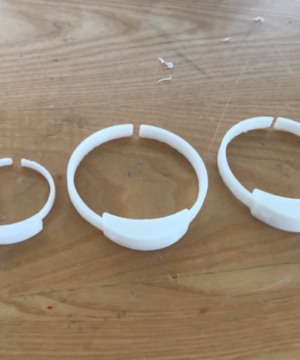
    Having the opportunity to create a wearable technology that can potentially be part of the solution for such a pressing issue was something rather exciting to accomplish. I think in-depth research and constant brainstorming helped me make a rather thoughtful project, and I believe I’ve grown a lot.

    -Class of 2023 Student Seher Y.

    Driving Question: How can I create a wearable inspired by the Expo 2020 ‘Opportunity’ theme that solves or draws awareness to a contemporary problem?

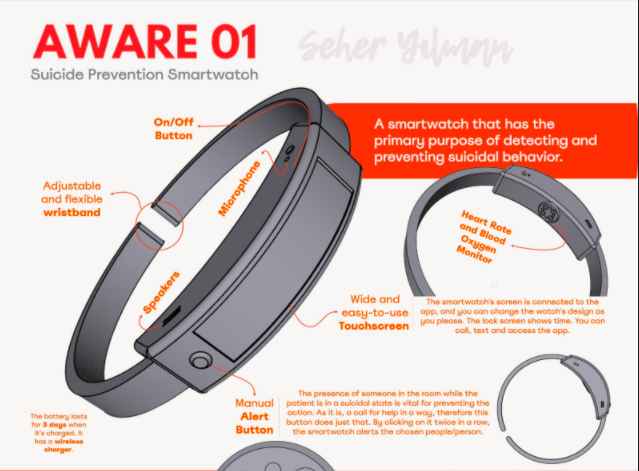
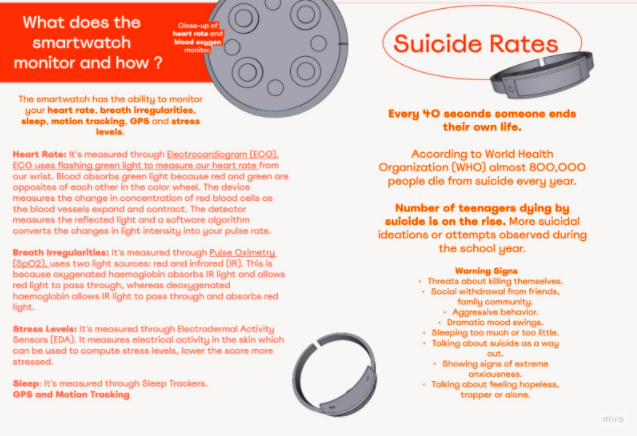
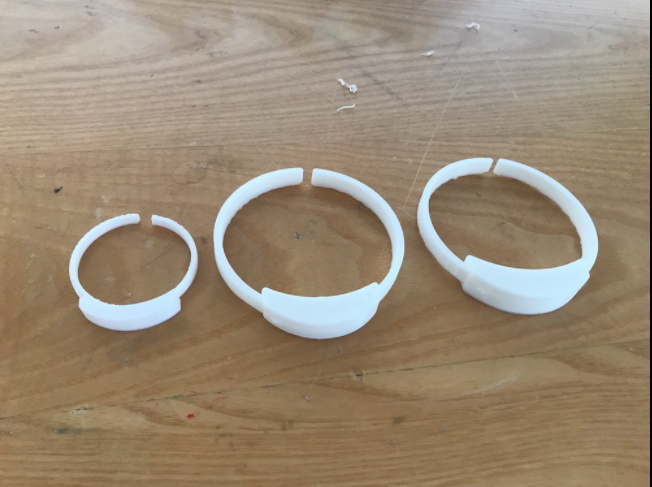
    Every 40 seconds, someone ends their life. My smartwatch concept has the primary purpose of monitoring the suicidal behavior of the patient while providing a feature of manually alerting selected people about their suicidal state. The watch monitors physical symptoms (e.g. heart rate, breath irregularities, stress, motion tracking) by using sensors to detect suicide risk objectively and rapidly. Out of sight, easy-to-use, and effective.

  5. Defining Art

    January 27, 2022 by Keetah B.

    Art is such a big part of Oaxaca’s culture and its diversity is what makes it so unique. We had the chance to talk to artists who make art for a living, and it has been in their family for 5 generations. We also had the chance to talk to newer artists who may not depend on it for an income. It has been a very interesting experience to take in all the different perspectives of these artists, and learn about how they all coexist in the same place.

    -Class of 2024 Student Keetah B..

    Driving Question: How might we convey the intersection of local arts and economy through documentary filmmaking?

    What were your goals for this module? How did you achieve them?

    During the AyAyAyAyAy module, my goals were to improve my filmography skills while gaining an in-depth understanding of art and economy here in Oaxaca.

    Through this module, we were filming and editing for hours at a time, so I improved my filmography skills through constant practice and analyzing what I did wrong and how I could improve it. We also got feedback from local videographers, which was very useful when using Premiere Pro for the first time.

    During both the weXplore and back at the main residence, the experiential learning really helped me feel like I understood Oaxacan art. We even got to take part in making the art and talk to the artists. I now have a greater understanding of the relationship between art and economy, art and politics, and art and culture. I feel that I have also learned about how vital artisanship is here and the perspective more modern artists have of artisans.

    What new things did you learn about yourself?

    I learned more about my filming style and what I can improve on when filming. I also learned that I’m a perfectionist, especially when it comes to editing.

    I learned that my perspectives of what art is and the motivations people have for art don’t always align. I also learned how people’s perspectives of art itself might change depending on why they do art.

  6. Beyond a Canvas Project

    by Kiana B., Camille A., Kirsten A.

    Driving Question: How might we convey the intersection of local arts and economy through documentary filmmaking?

    What were your goals for this module? How did you achieve them?

    To inform others about local artists in Oaxaca relating to art and the economy. 

    What new things did you learn about yourself?

    Throughout this module, we learned multiple different things: From how art and economy in Oaxaca are changing to learning how to edit and film our very own documentary. This module also tested our limits, as it was very demanding no matter how interesting, and we can say that we are very proud of our final result.

    What are your big takeaway lessons from this project?

    Our biggest takeaway is how the art industry has evolved here and how that impacts the artists here in Oaxaca, and how there is more openness to expressing oneself through art.

  7. Efficient Human Settlement

    by Mila F. Mmelta M. and Guillermo H.

    One of my favorite sessions was right after our wexplore, visiting Tierra del Sol. It was unbelievable. The place was fantastic and so heart-warming. Everything was so thought out and showed an impressively accurate representation of what a community space should look like. I spent such a great time there and hope to go again. I learned more than I could’ve imagined.

    -Class of 2023 Student Mila F.

    Driving Question: How might we use our understanding of architecture through time to design a context-informed structure?

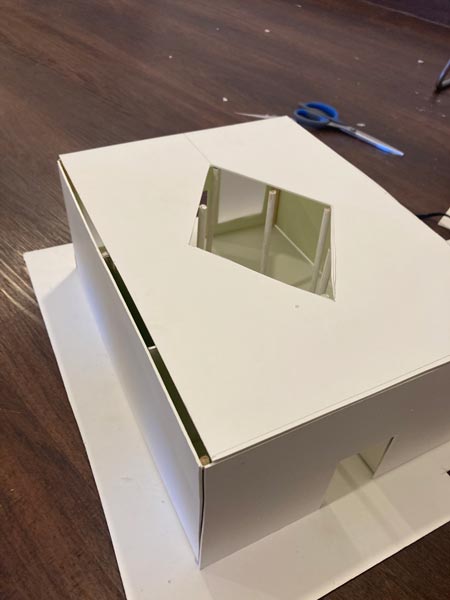
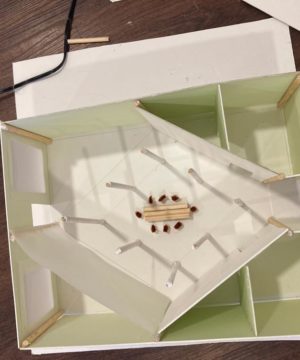
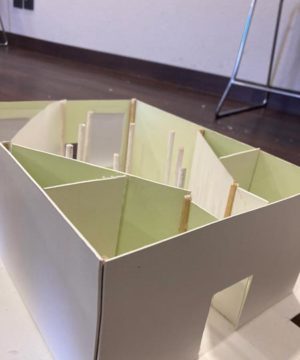
    Our group designed what we believe is a modern take on a traditional Oaxacan house and gastronomical hub which showcases the Oaxaca’s rich food and drink diversity.

    What new things did you learn about yourself?

    We learned about the impact of colonialism on Mexican architecture through our experience through seeing the use of traditional European elements that incorporate Mexican structures.

    What are your big takeaway lessons from this project?

    Our biggest takeaway was the process of the environmental impact analysis as I feel like the process of environmental impact analysis will be very important in any project I want to do that involves construction thinking about input and output I am putting in the environment.

  8. Urban Gardens

    by Viktoria L.,Rachel C.,Samy M.

    This module was one of my favourites, as I learned more about the ins and outs of sustainable buildings in the state of Oaxaca and a little bit of architecture. Ever since TGS introduced the core value of Pixki, I have become more aware of the environment and the impact humans have had and will continue to have on the world around us. Every small project like this makes me think more and become conscious of my actions.

    -Class of 2022 Student Viktoria L.

    Driving Question: How might we use our understanding of architecture through time to design a context-informed structure?

    What were your goals for this module? How did you achieve them?

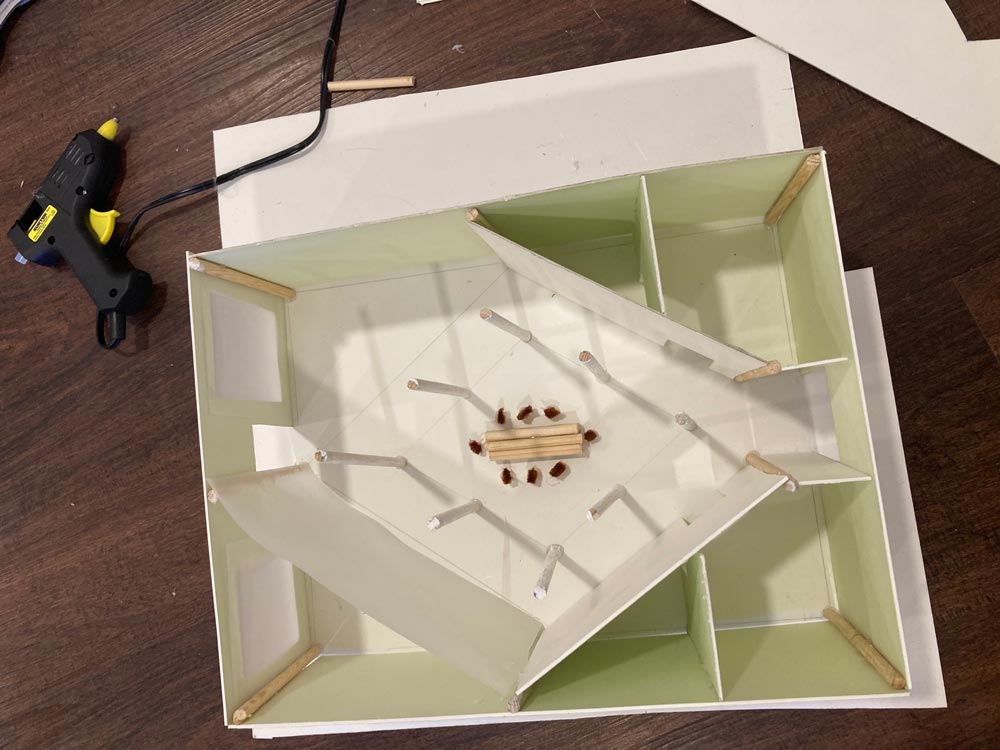
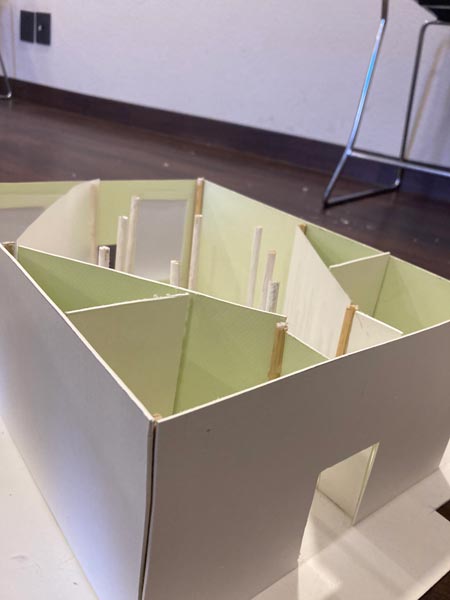
    Our goal this term was to create a sustainable settlement that involved the development of a community garden, greenhouse, and administrative building to encourage ethnobotanical practices in the city of Oaxaca. We achieved this by creating an environmental impact statement, presenting it to a panel of Oaxacan architects, and applying the feedback we received from them to build a miniature settlement in real life.

    We acquired the knowledge to do so from our weXplore, where we first practiced building models and creating environmental impact assessments. Tierra De Sol also factored in, as it’s where we learned more about sustainable practices. Oaxacan architects also played a large part, as they answered our questions even after the panel.

    What new things did you learn about yourself?

    We learned that we are very good at building expandable walls as a team. At Tierra De Sol, we were given the chance to do so, and we were the fastest, most efficient group of all. We sawed and drilled twice as many sticks as everyone else. Our secret was that everyone had a role in the activity, and we worked the best we could.

Sign up if you would like to receive occasional news from us.

Subscribe