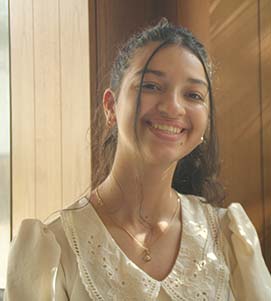
This module was unique to me, as I had never known how interested I was in architecture until I experienced it during these two months. I have also learned the importance of focusing on the journey and the learning instead of making my product look perfect.
-Class of 2023 Student Sara G.
Driving Question: How can I design and build a model home or community that will function efficiently in a desert environment?
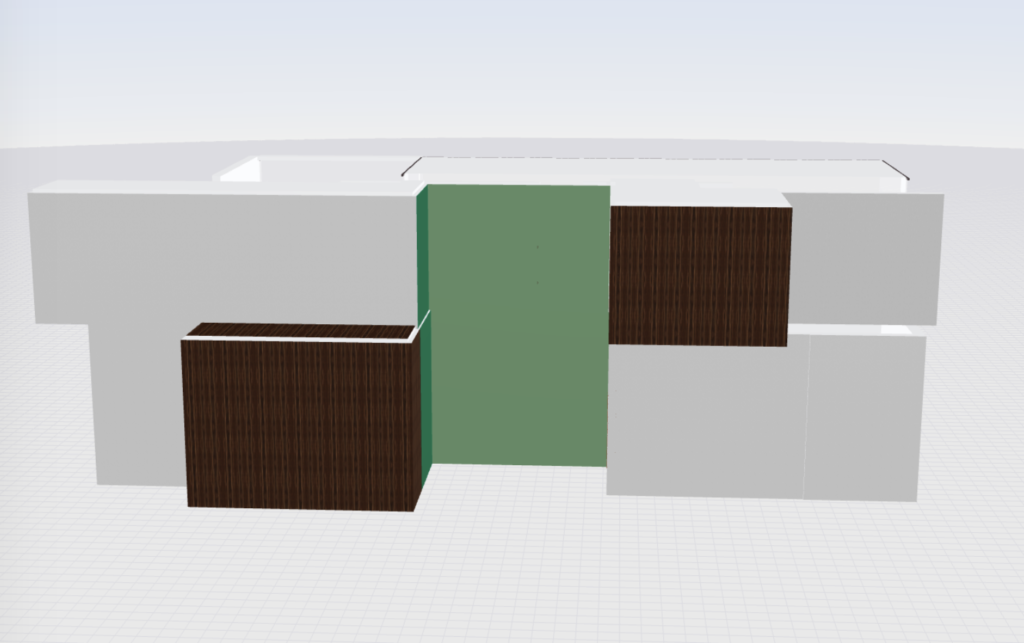
Are you looking for a house that is both nature-friendly and luxurious? Then my project, “Fresh Air,” is perfect for you! Located in The Palm Islands, it combines different panoramic views, from the relaxing beach view to the moat with the fish, and finally, the lush green spaces all around the house.
This house combines many aspects of sustainability: It saves water by taking it from the beach and using it in the pool and the moat. The greywater is used for watering the garden and for the flowers all around the house. The materials used (concrete, bamboo, etc.) are very eco-friendly. Solar panels help produce electricity using solar energy. The fish in the moat produce waste that contributes to the growing of plants.
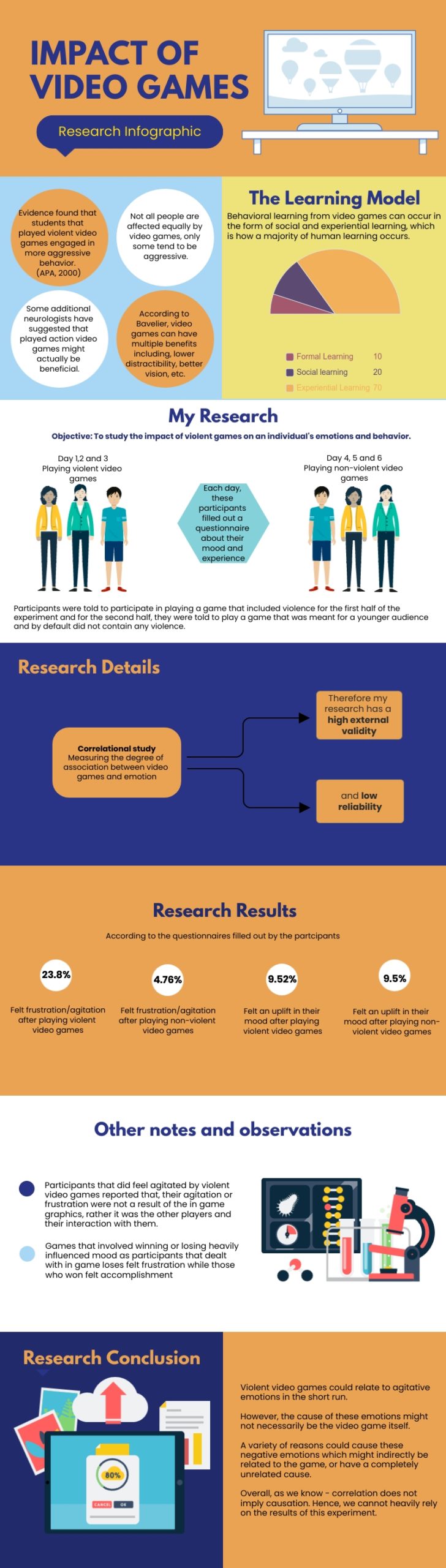
Driving Question: How can I study the psychological impact of video games?
Module Overview: For her project, Zoya focused on psychological research by measuring the emotional and behavioral impact of violent and non-violent video games. Her correlative research looked at how playing video games affects individuals by observing them in their natural environment. The participants reflected on their mood and behavior, and Zoya evaluated this research to arrive at her conclusion.
Project Reflection: “Through this project, I learned that I am quite interested in psychology. Conducting research was exciting; however, reading about existing research and previous studies was also quite fascinating. I learned so much about different research methods, and I made so many mistakes while conducting my research. Learning from my own mistakes, however, makes me confident about conducting more investigations in the future.”
Driving Question:How can we convey the complexities of ethnic and religious reconciliation through our experience of Bosnia and Herzegovina?
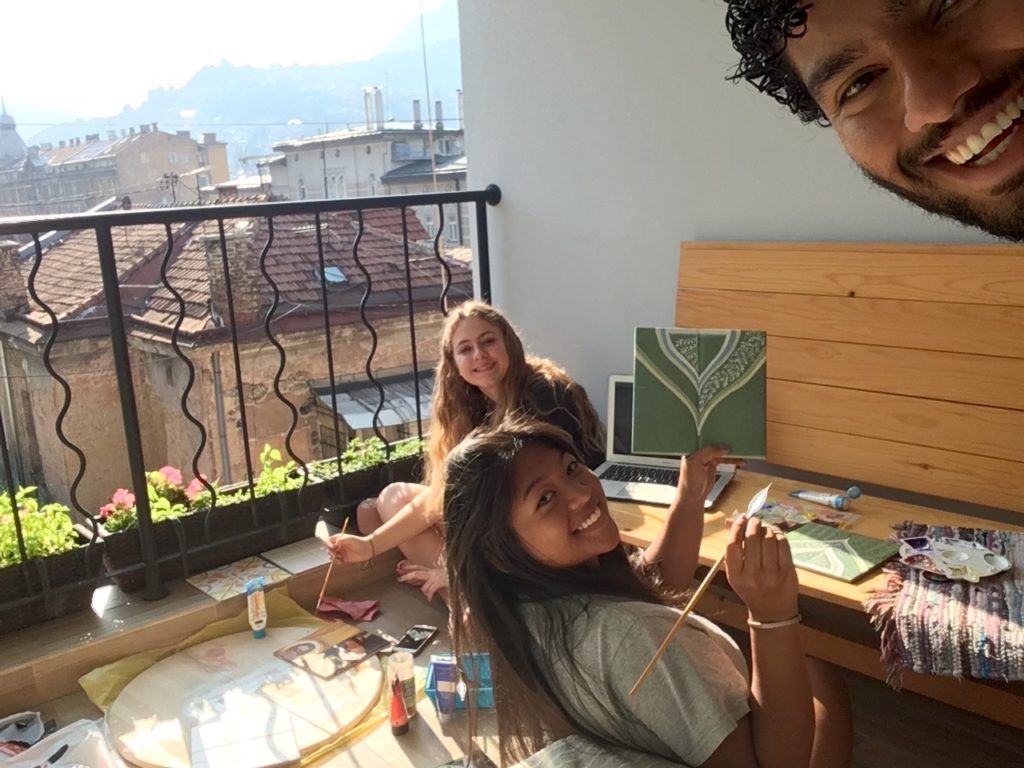
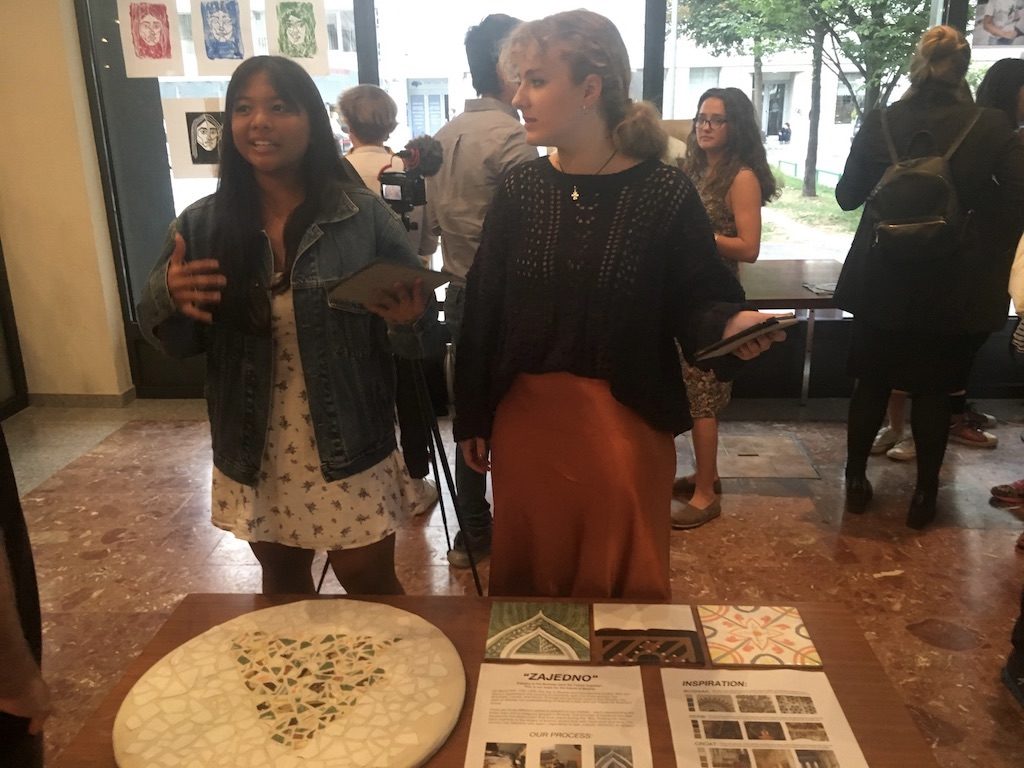
Students Lexie and Gigi decided to tackle an art form that was new to them for their project: crafting a mosaic. The project was filled with symbolism: breaking the tiles represented the destruction that took place during the 90s conflict. Putting the tiles back together in the shape of Bosnia showed that with hard work and time (and given that this was a new art form for the two of them, it required a lot of hard work and time), Bosnia can one again become, regardless of age, culture, ethnicity, or religion.
Lexie and Gigi visited Bosniak mosques, Serbian Orthodox churches, and Croatian Catholic churches to understand what color tiles to use in the mosaic. They learned that green is an essential color in Islam and is Muhammad’s favorite color, that Orthodox churches are often very colorful, and that Croatian Catholic churches heavily feature whites and golds.
Once they had identified color schemes and prominent designs, they created patterns based on what they had seen during their scouting process and featuring the colors mentioned above. Once the tiles were created, they smashed them into pieces (90s destruction). Next, they combined the colored elements with white tiles to form the outline of Bosnia and Herzegovina. To finish the piece, Lexie and Gigi grouted the gaps and glossed the top to make everything shine.
Driving Question: How does the fashion industry work in China and what are its impacts?
For her personal project, CM2 student Monica D. created a video essay focusing on fast fashion’s environmental impact. The presentation’s goal was to convey the environmental effects of fast fashion and how everyone can help reduce these negative effects by being conscious of the items they choose to buy and donating clothes instead of throwing them away.
Clothing brands make new clothes based on the trends of the moment and churn them out quickly to make them accessible to the general public. Brands that do this are considered fast fashion brands and create a total of 150 billion garments per year.
Monica discusses how the mass amount of clothing produced affects the environment, including the ocean and land, and explains how the production of clothing – from beginning to end – releases an unimaginable amount of greenhouse gas and carbon dioxide into the air. For example, during the fiber production stage, oil is utilized. Next, when the clothes are produced, chemicals are added to change the appearance of the textiles. As the consumer uses the garment, it is washed with additional chemicals, and finally, after use, it goes to landfills where it is eventually burned.
So what can you do about the issue? Monica explains that the main thing you can do is decrease your purchase of fast fashion brands. If everyone did, this would lower consumption, and these brands would be forced to reduce their production, lessening the environmental impact. Also, when purchasing clothes, look into buying items that are made through greener methods.
Driving Question: How can I use photography to raise awareness about our human behavior’s impact on the environment?
Project Description
My personal project this term is a photography project about human behavior’s impact on the environment. While wondering why we are not acting as urgently as we should for the climate crisis, I found people often see the crisis as a distant challenge, both in time and in space. Through this project, I wanted to raise awareness about the impact of our daily and individual actions on the environment, and ultimately, bring people closer to the challenge.
Reflection:
“My main takeaway from this project is that, no matter how global any challenge is, the individual action will end up making the difference.”
Driving Question: How might we collaboratively implement a design-thinking process to meet the needs of the community we serve?
What were your goals for this module? How did you achieve them?
The team’s main goal was to work collaboratively to achieve maximum efficacy and the best results. When we wrote the agreement, we all shared the same ideas of working in a team. We all liked working with people, but we all had concerns because the 3 of us have had somewhat bad experiences with people working on a team. However, the group bonded really well and really quickly, and that gave us a huge advantage because we knew we could trust each other, which led to more effective and fun work sessions. Also, the 3 of us wanted to work in all aspects of the project; we did not want to split roles. That’s why the 3 of us collaborated in all five parts of the design thinking process, and we did not split the work; we worked together.
What did you learn about yourself or about your creative process or about your medium?
The team thought this was a huge learning experience and the 3 of us learned a lot about ourselves and how we collaborate. In addition, we learned a lot about architecture and design, considering our project lied in those fields. We learned that designing plans for a school is challenging, especially when you have to meet certain criteria for the people you are working for. We also learned that we are good collaborators because some team members thought that they were bad at working in teams. We think that the most valuable thing we learned was how to create a professional but at the same time laid back team environment that archives good efficacy. The team dynamic that we created was very effective. We can attribute its success to the agreement that we wrote and the meetings we had before actually starting to work on the project.
What did this project mean to you?
We all felt very excited about working on this project as it was both a cool opportunity to use skills we were interested in and create physical change, as well as being able to work with an organization that one of us knew personally. While the end result of this project may be years down the line, it feels good to create something that may become reality due in part to our design.
Driving Question: How might we collaboratively implement a design-thinking process to meet the needs of the community we serve?
Explanation of Summative
Our summative product is the concept design and layout for an app designed to help households cut back on their domestic food waste by providing them with an interface to better manage the contents of their fridge, their dietary needs, and trips to the grocery store. The app would address some of the main reasons for domestic food waste that we identified – overbuying of food in general and poor storage of it in the house (i.e. forgetting about it in the fridge, letting it exceed its expiry date and having to throw it away, etc).
What were your goals for this module? How did you achieve them?
Our primary goal as a team was to learn how to collaborate effectively online, especially when deprived of the intimacy and information exchange of real human contact. Our meetings were casual yet productive, and we made the most of our situation by calling each other frequently in between to compensate for the lost opportunities we would have had if we were physically together. Another of our goals was to learn how to properly conduct interviews with users – we achieved this first by researching the nuances of good and bad interviews and then interviewing members of our families, the TGS community, etc.
What did you learn about yourself or about your creative process or about your medium?
A large part of our creative process had to do with accommodating various people in our team. This meant scheduling meetings, which included keeping in mind a distance of 7 hours between two of the members’ timezones. In another sense, though, this involved designating roles based on different people’s abilities and expertise, largely to do with technology and software design. Therefore, we learned the importance of using the strengths of the people on our team and assigning them to the areas that they’d be most effective in.
What did this project mean to you?
This project was meaningful in that it brought a group of us students together who didn’t necessarily interact very much outside of school before; it also taught our team much about the real nature of collaboration as something that can be both online and in person.