Back
  1. Narrative of Life

    December 10, 2024 by Teacher-Led Module

    Driving Question:

    How can we use multimedia literary expression to tell the story of conservation of biodiversity in Brazil?

    Module Summary:

    The teacher-led module “Narrative of Life” explores how storytelling can be used to communicate the importance of biodiversity conservation in Brazil. Guided by the driving question, how can we use multimedia literary pieces to tell the story of conservation of biodiversity in Brazil, students investigate environmental issues through creative expression, combining research with artistic interpretation to raise awareness about human impact on nature.

    Throughout the module, students participate in a range of field experiences, workshops, and expert-led sessions that deepen their understanding of conservation and storytelling. Learners engage with professionals such as an agroforestry project leader, take part in poetry and vocal workshops, and join a boat expedition with a marine bioacoustics expert. A key highlight of the module is a week spent in the Amazon, where students gain firsthand insight into biodiversity and conservation efforts, supported by local organizations and experts.

    In their final projects, students create immersive multimedia literary pieces that communicate environmental narratives in creative ways. These projects include performances, writing, and audiovisual storytelling that aim to inspire awareness and action. For example, students present works such as a song that personifies nature to highlight the impact of human exploitation, using artistic expression to convey complex environmental issues. Through this interdisciplinary approach, the module emphasizes the power of storytelling in driving meaningful change and fostering a deeper connection to the natural world.
  2. Everywhere and Nowhere

    September 12, 2024 by Shangrila X.

    Driving Question:

    How can I communicate the results of my own study into the impacts of commercial whale watching on marine mammals to a scientific/non-scientific audience?

    Project Summary:

    The Mastery Project “Everywhere and Nowhere” is a year-long, interest-driven research project exploring cetaceans, the collective term for whales, dolphins, and porpoises. In this project, Shangrila X. investigates the intersection of marine mammal research and behavioral science, focusing on how scientists study and track whale populations through tools such as photo identification, location data, and emerging technologies like drone-based aerial observation.

    A central focus of the project is the relationship between commercial whale watching and marine mammal behavior. Shangrila examines how human interaction with whales may influence their behavior and movement patterns, particularly in the Salish Sea near Vancouver. The project also explores existing policies designed to protect whales, such as regulations requiring vessels to slow down and keep distance when whales are nearby, while considering both the potential challenges and positive impacts of whale watching activities.

    In addition to conducting research, Shangrila’s project investigates how scientific knowledge can be communicated to different audiences. Rather than relying only on traditional research papers, the project explores multiple communication methods that can make marine science more accessible and engaging for both scientific and non-scientific communities. Through this approach, Shangrila aims not only to deepen understanding of cetacean behavior but also to inspire greater public interest in marine conservation.

  3. Quake Quest

    by Teacher-Led Module

    Driving Question:

    How can we improve earthquakes preparedness in Vancouver through collaboration and innovation?

    Module Summary:

    The teacher-led module “Quake Quest” explores the science, history, and societal impact of earthquakes in Vancouver and the surrounding region. Guided by the driving question, how can we improve earthquake preparedness in Vancouver through collaboration and innovation, students investigate the risks associated with seismic activity and the strategies communities use to prepare for and respond to natural disasters. The module emphasizes interdisciplinary learning, combining science, mathematics, history, and technology to better understand earthquake preparedness.

    Throughout the module, students learn from guest speakers, field experiences, and hands-on investigations that deepen their understanding of earthquakes and disaster response. Students explore Indigenous knowledge through stories such as the Thunderbird and Whale, which help explain natural phenomena and preserve historical records of seismic events. They also receive training in emergency preparedness from Christine Bodnarchuk of the BC Earthquake Alliance, learning essential safety practices such as “Drop, Cover, and Hold On.” Additional speakers introduce topics including search-and-rescue operations with trained dogs, artificial intelligence in disaster response, and the role of satellite data in detecting ground movement after earthquakes.

    Students also participate in experiential learning opportunities, including visits to local geological landmarks along the Sea-to-Sky corridor and the Museum of Anthropology, where they explore both the geological causes of earthquakes and their cultural and historical impacts. In their final assessments, students apply their learning by creating tabletop games that incorporate earthquake science and probability concepts, as well as developing AI-based proposals aimed at improving earthquake preparedness, response, and recovery. Through these projects, students demonstrate how collaboration, technology, and education can help communities better prepare for future seismic events.

  4. Roof Rights

    by Teacher-Led Module

    Driving Question:

    How can we understand the impact of equity and Canadian policies on the unhoused populations of Vancouver to propose new policies?

    Module Summary:

    The teacher-led module “Roof Rights” explores the challenges of housing affordability and homelessness in Vancouver. Guided by the driving question, how can we understand the impact of equity and Canadian policies on Vancouver’s homeless population in order to propose new policies, students investigate the social, economic, and political factors that shape housing access in the city. The module encourages learners to analyze real-world systems and develop policy-based solutions to address the housing and homelessness crisis.

    Throughout the module, students conduct independent research, field visits, and discussions with experts to better understand the issue. Learners visit sites such as the Chinatown Foundation and East Hastings, where they observe initiatives focused on supporting unhoused individuals and revitalizing communities. They also explore other areas of Vancouver, including Deep Cove, to examine the contrast between neighborhoods with high livability and those facing significant housing challenges. These experiences help students understand how access to services, resources, and inclusive infrastructure shapes quality of life in urban environments.

    Students also learn from guest speakers and researchers who share insights into homelessness, drug policy, and social support systems in Vancouver. Speakers include filmmaker Dominic Streeter, author Travis Lupick, and researcher Jing Xue, who discuss topics such as substance use, safe injection sites, and experimental housing initiatives. The module culminates with students developing policy proposals aimed at improving support systems for unhoused populations, addressing areas such as community centers, rehabilitation programs, mental health resources, and housing assistance.

  5. Documentary Filmmaking

    January 28, 2022 by Niko W. and Dhruv G.

    This project taught me the importance of collaboration and using people as a resource. Because we were able to combine our skillsets, we could create a high-quality final product, which I do not think I would have been able to achieve alone. I learned a lot from this team project, including troubleshooting Premiere Pro and maintaining our sense of humor in stressful situations.

    -Class of 2023 Student Dhruv G.

    As a personal project this term, CM2 students Niko W. and Dhruv G. challenged themselves to develop a short documentary capturing the essence of how modules work at TGS, using the Mo-Botics module as an example. They set out to answer the following driving question: “How can we use documentary filmmaking to capture the essence of PBL at TGS?

    The pair investigated different aspects of documentary filmmaking and combined their prior experience and skillsets to storyboard, plan, and execute the film. They also used a combination of student interviews and shots from module excursions as the film’s backbone.

    By dividing roles and putting in a substantial amount of post-production editing, they achieved a high-quality final product which they presented at the THINK Beyond showcase.

  6. Mo-Botics Module

    by Bido H. Luiza M. Santiago D. and Noemie T.

    Getting into the field of robotics with little hardware knowledge was both challenging and exciting. I learned that I can find ways to implement existing knowledge into a new field and that there’s always room to lead my own learning experience if I work hard enough. My biggest takeaway is always approaching any new project with a positive, open, and flexible mindset.

    -Class of 2023 Student Bido H.

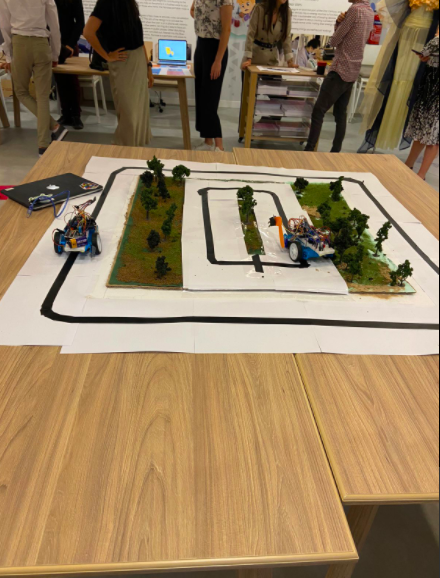
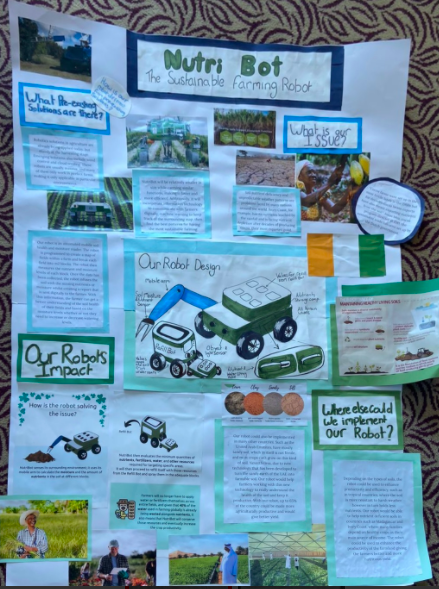
    Driving Question: How can I design and build a robot – inspired by Expo 2020 and the Mobility Pavilion – that performs an action to increase our quality of life?

    Our project is an autonomous conservational technology system that aims to provide efficiency in agriculture. NutriBot goes around agricultural fields and senses its surrounding environment to measure moisture levels and the type of nutrients in the soil. It then uses this data to evaluate the minimum quantities of water and nutrients necessary to keep the soil healthy and sprays them in the targeted blocks. Implementing this system will make farmers no longer have to apply water or fertilizers across entire fields. NutriBot can conserve up to 40% of water already wasted in agriculture alongside nutrients due to human error and inefficiency.

  7. Central Palm Project

    by Saffron B.

    I gained a newfound appreciation for all of the work that goes into architecture. This module made me excited for the future since I got to learn about many new and upcoming sustainable technologies.

    -Class of 2023 Student Saffron B.

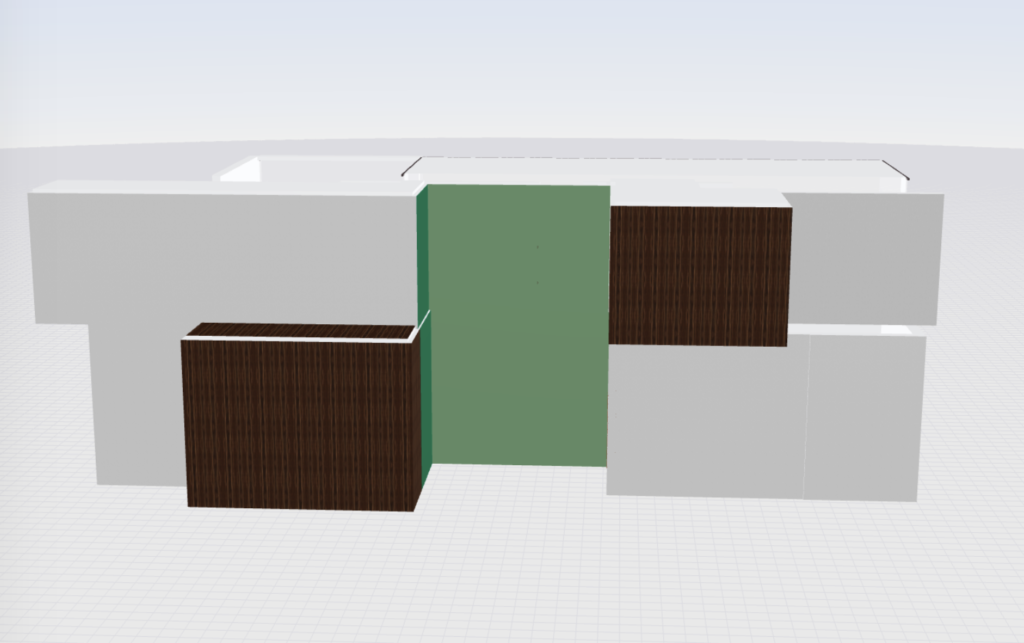
    My project, “Central Palm,” is located on the golden shores of Kite Beach. The central courtyard is the house’s spine, allowing year-round use due to the shade of the ghaf tree while still maintaining privacy from the outside world. The state-of-the-art Tesla solar roof reduces the owners’ reliance on the grid, even allowing you to sell excess solar energy back to the grid. Water-collecting tech that utilizes local sea breezes alongside sound-absorbing glass, inspired by the Czech Republic Expo pavilion, combines sustainability and modernity, thereby maintaining harmony with the local environment. The house features traditional Islamic design, such as columns, a majlis space for entertaining guests, and a prayer room. This house isn’t the future; this house is now.

  8. Fresh Air Project

    January 27, 2022 by Sara G.

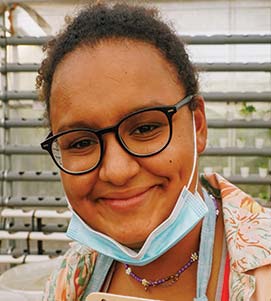
    This module was unique to me, as I had never known how interested I was in architecture until I experienced it during these two months. I have also learned the importance of focusing on the journey and the learning instead of making my product look perfect.

    -Class of 2023 Student Sara G.

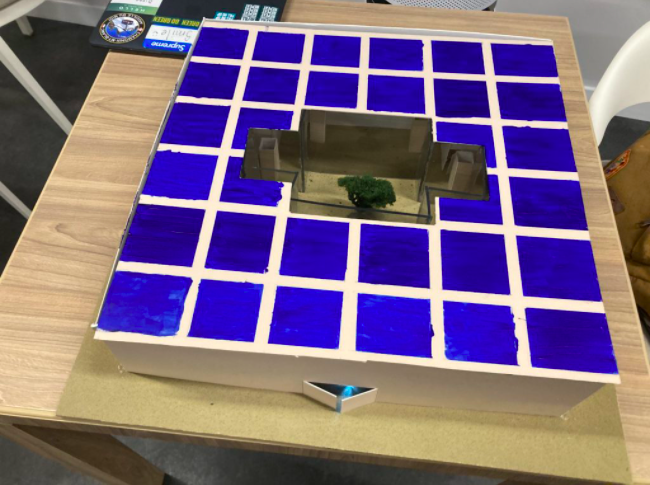
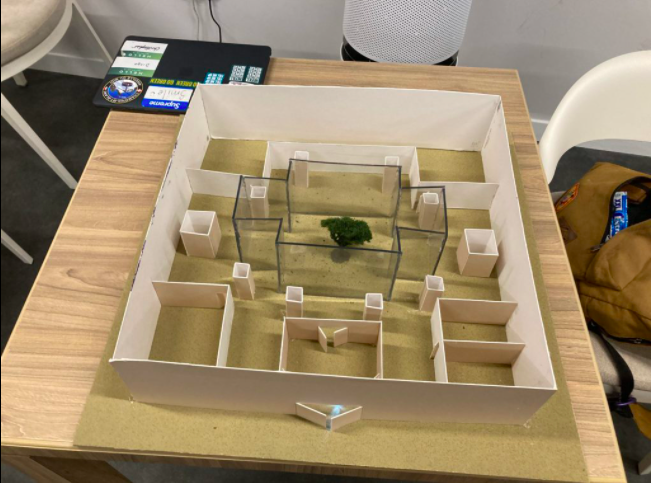
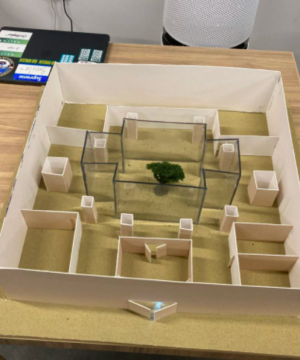
    Driving Question: How can I design and build a model home or community that will function efficiently in a desert environment?

    Are you looking for a house that is both nature-friendly and luxurious? Then my project, “Fresh Air,” is perfect for you! Located in The Palm Islands, it combines different panoramic views, from the relaxing beach view to the moat with the fish, and finally, the lush green spaces all around the house.

    This house combines many aspects of sustainability: It saves water by taking it from the beach and using it in the pool and the moat. The greywater is used for watering the garden and for the flowers all around the house. The materials used (concrete, bamboo, etc.) are very eco-friendly. Solar panels help produce electricity using solar energy. The fish in the moat produce waste that contributes to the growing of plants.

  9. The Psychological Impact of Video Games

    June 7, 2021 by Zoya A.

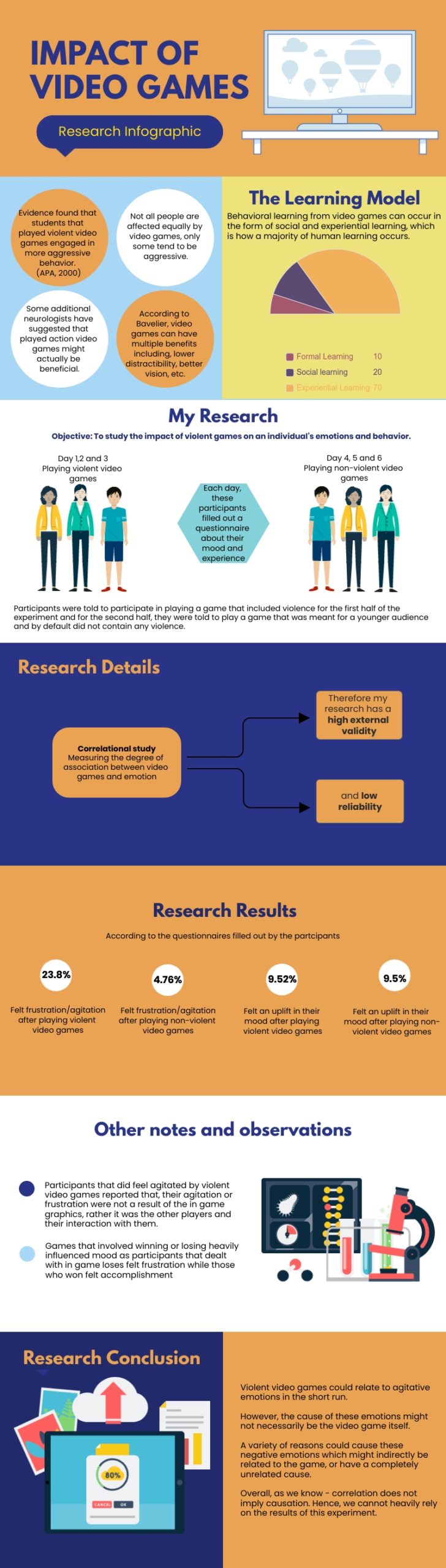
    Driving Question: How can I study the psychological impact of video games?

    Module Overview: For her project, Zoya focused on psychological research by measuring the emotional and behavioral impact of violent and non-violent video games. Her correlative research looked at how playing video games affects individuals by observing them in their natural environment. The participants reflected on their mood and behavior, and Zoya evaluated this research to arrive at her conclusion.

    Project Reflection: “Through this project, I learned that I am quite interested in psychology. Conducting research was exciting; however, reading about existing research and previous studies was also quite fascinating. I learned so much about different research methods, and I made so many mistakes while conducting my research. Learning from my own mistakes, however, makes me confident about conducting more investigations in the future.”

  10. Fracture and Reconciliation Through a Mosaic

    February 26, 2021 by Lexie and Gigi

    Driving Question:How can we convey the complexities of ethnic and religious reconciliation through our experience of Bosnia and Herzegovina?

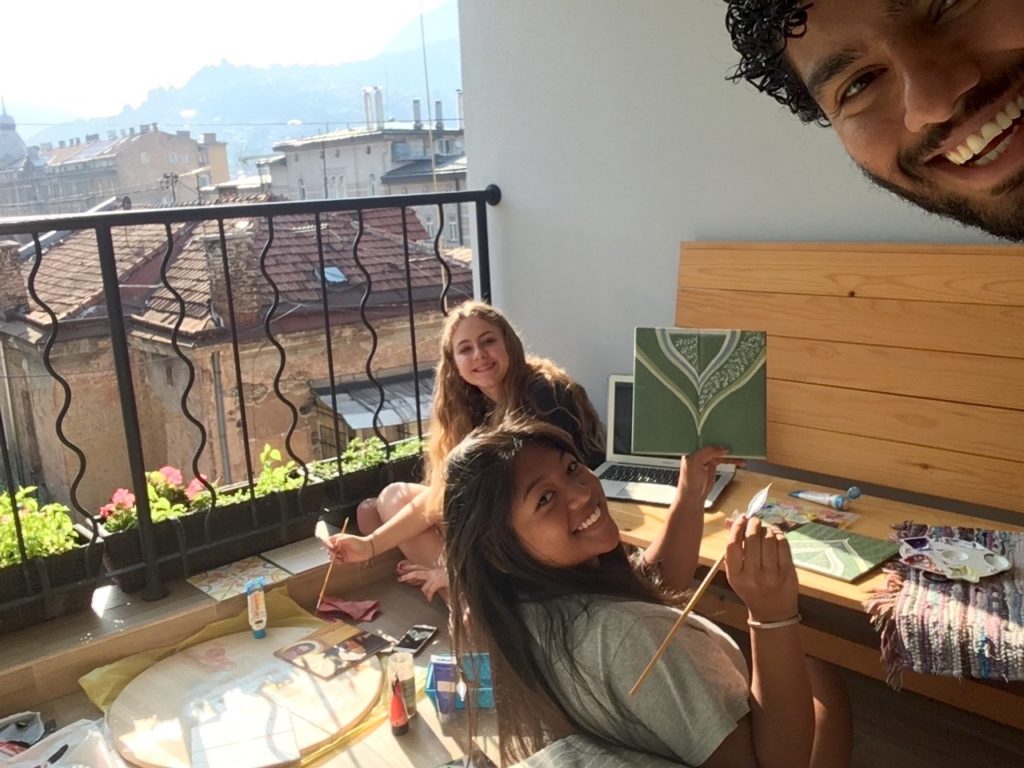
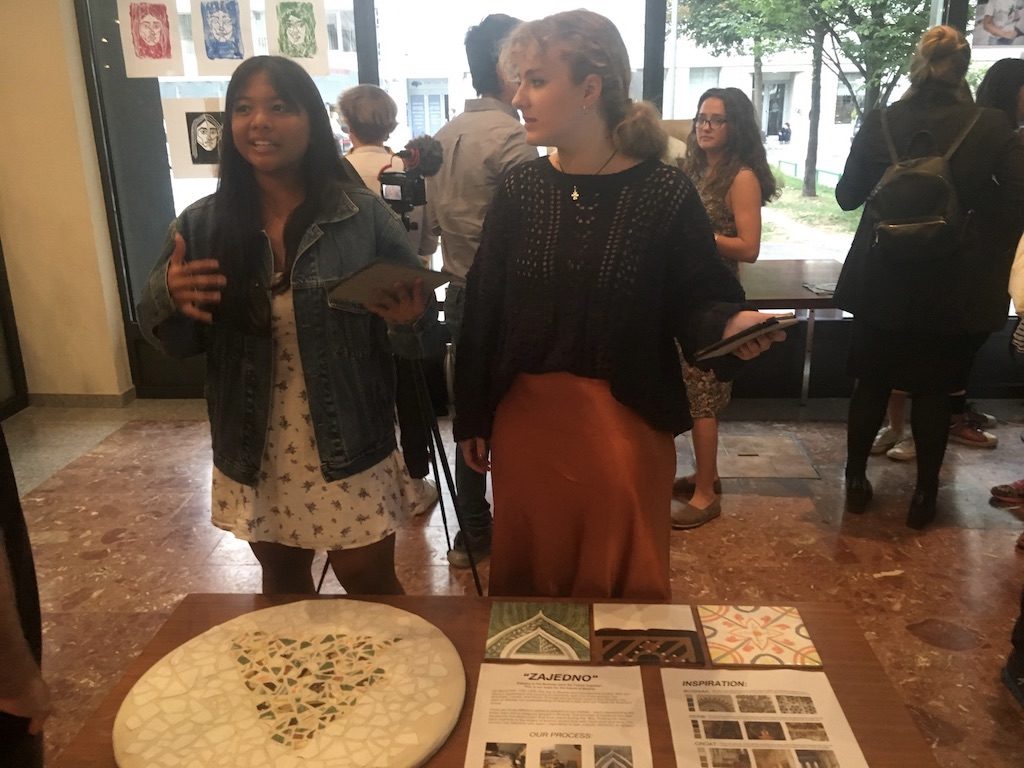
    Students Lexie and Gigi decided to tackle an art form that was new to them for their project: crafting a mosaic. The project was filled with symbolism: breaking the tiles represented the destruction that took place during the 90s conflict. Putting the tiles back together in the shape of Bosnia showed that with hard work and time (and given that this was a new art form for the two of them, it required a lot of hard work and time), Bosnia can one again become, regardless of age, culture, ethnicity, or religion.

    Lexie and Gigi visited Bosniak mosques, Serbian Orthodox churches, and Croatian Catholic churches to understand what color tiles to use in the mosaic. They learned that green is an essential color in Islam and is Muhammad’s favorite color, that Orthodox churches are often very colorful, and that Croatian Catholic churches heavily feature whites and golds.

    Once they had identified color schemes and prominent designs, they created patterns based on what they had seen during their scouting process and featuring the colors mentioned above. Once the tiles were created, they smashed them into pieces (90s destruction). Next, they combined the colored elements with white tiles to form the outline of Bosnia and Herzegovina. To finish the piece, Lexie and Gigi grouted the gaps and glossed the top to make everything shine.

Sign up if you would like to receive occasional news from us.

Subscribe