Back
  1. AI Journalism

    August 31, 2023 by Santiago D.

    Driving Question:

    How can AI be applied in investigative, opinion, and solutions-based journalism in the context of digital communities in Bosnia?

    Module Summary:

    The “AI Journalism” module explored the intersection of artificial intelligence and journalism. The module aimed to understand the capabilities and limitations of AI in news writing and its impact on current events.

    Students investigated the origins and evolution of journalism in their home countries and Bosnia, comparing human-written articles to AI-generated content. They examined various types of journalism—investigative, solution-based, and opinion—and learned how AI can be ethically and legally integrated into these fields.

    The module included excursions to notable sites like the Al Jazeera Balkans, the National Museum of Bosnia and Herzegovina, and the Sarajevo Film Festival. Guest speakers provided insights into wartime reporting and modern journalism challenges, emphasizing the irreplaceable human element in storytelling.

    Through practical experiences and reflections, students created their own articles, juxtaposing them with AI-generated pieces to discern the unique human touch in journalism.

    For instance, senior student Santi D. created an article titled ‘Unraveling the Web of Deceit: Serbian Media’s Role in Spreading Fake News During the Yugoslav Wars,’ which examines the impact of misinformation during the 1990s conflicts in the Balkans. The article outlines how the Serbian media played a crucial role in shaping public perception and exacerbating ethnic tensions through the dissemination of fake news and propaganda.
  2. Carpentry Innovation

    August 1, 2023 by Niko W.

    Driving Question:

    How can you use traditional Bosnian carpentry techniques to create innovative product designs?

    Module Summary:

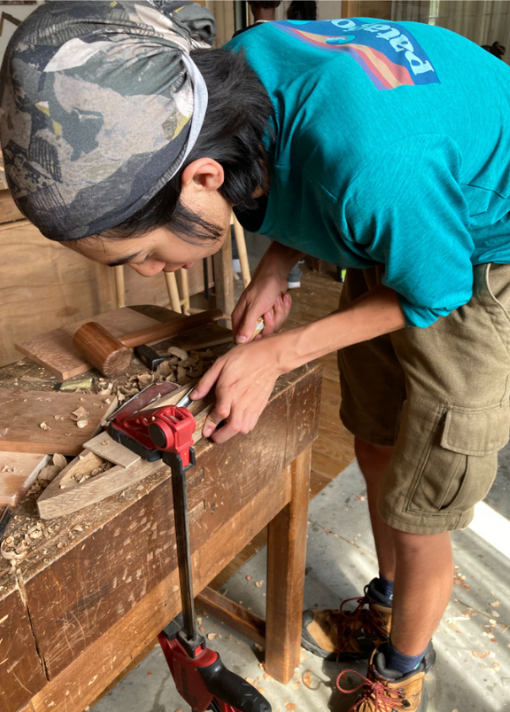
    The “Carpentry and Innovation” module, tasked students with transforming a plank of wood into an innovative and culturally significant piece over five days. Working closely with local experts in Konjic, the students learned traditional Bosnian carving techniques. They designed and created wooden carvings and objects, using both sketches and 3D models.

    Students visited the Zanat factory and a wood carving museum, where they were introduced to different types of wood, carpentry, and woodworking techniques. They also delved into the innovation aspect, learning about the difference between innovation and invention, legal and ethical considerations, and the process of idea protection through patents, trade secrets, and copyrights.

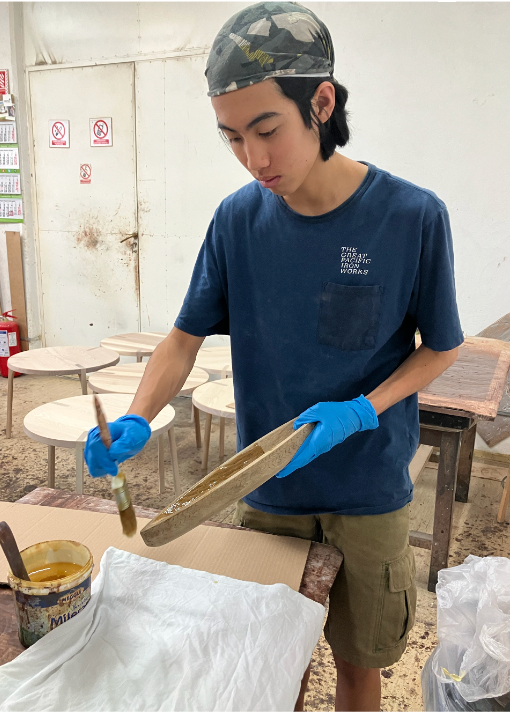
    After mastering the basics, the students created their final products in two factory spaces: Elektra, where they worked on sawing, chiseling, and filing their basic shapes, and Zanat, where they refined their shapes, added intricate patterns, and completed their projects with sanding and oiling.

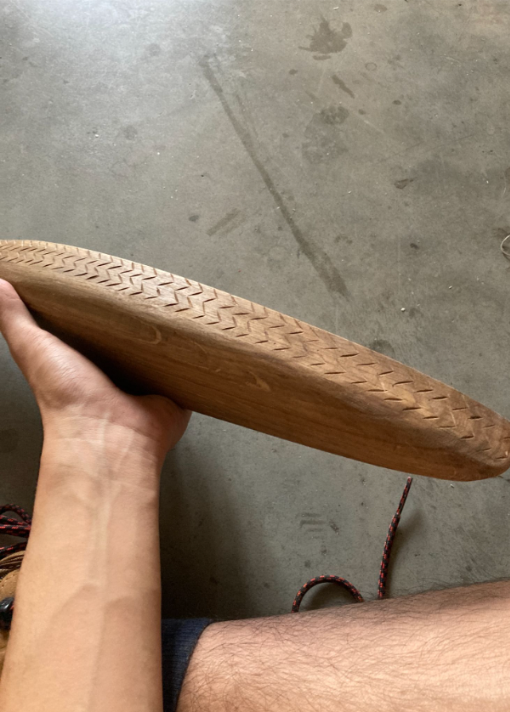
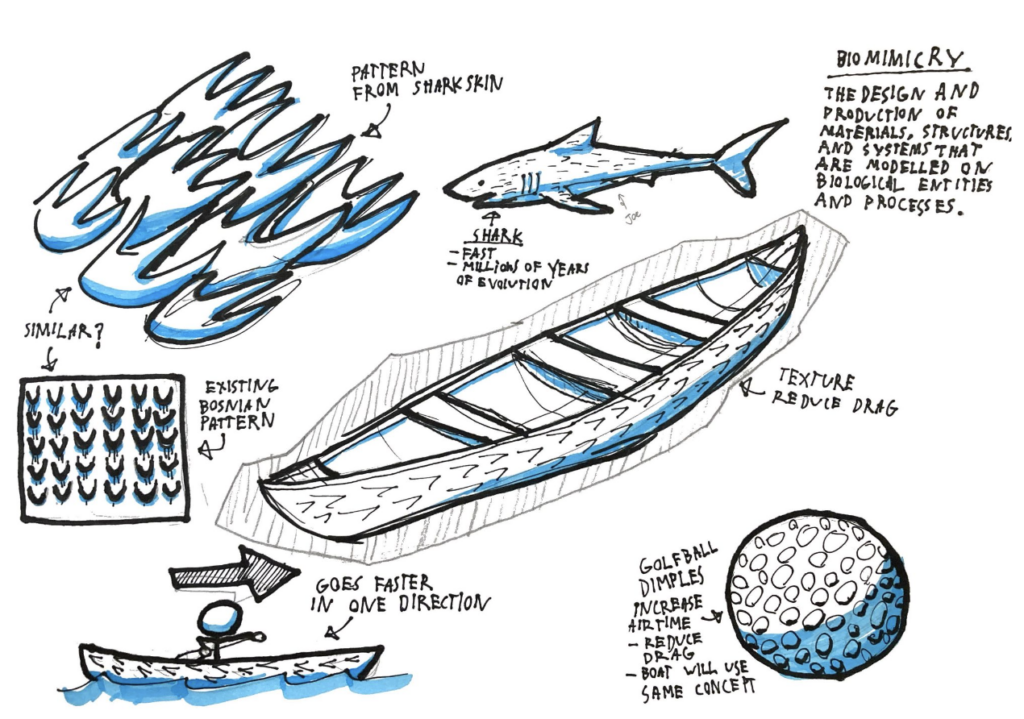
    Niko W.’s final product is an oak wooden boat with a unique texture designed to enhance its hydrodynamic performance, akin to the dimples on a golf ball or sharkskin texture. He employed two types of chiseling techniques—flat-headed, curved, and V-shaped—to serve different purposes in crafting the boat. The rip saw, while providing a cleaner cut, required more time compared to the bow saw, which removed more material but left a rougher finish.

    Initially using the rip saw for shaping, Niko later switched to the bow saw based on feedback from Alestra staff, prioritizing time efficiency over surface smoothness, as he planned to refine the boat’s sides through subsequent shaping and sanding. To achieve smoother edges and surfaces, he utilized a file initially for its material-removal capability, followed by 80-grit sandpaper to refine the texture further.

  3. Al Khail

    July 18, 2022 by Bido H.

    Driving Question: How can we model a clay sculpture inspired by Mexican beliefs and religious syncretism (the merging of different beliefs) to represent a fusion of our personal beliefs and values?

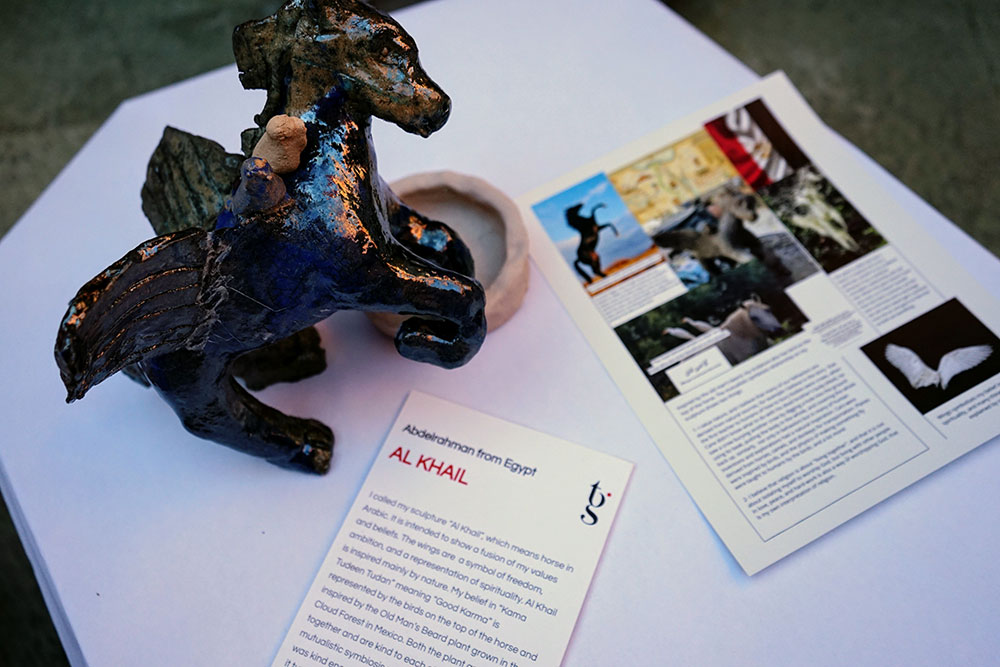
    Project Summary: Bido calls his sculpture “Al Khail,” which means horse in Arabic. It is intended to show a fusion of his values and beliefs. The wings are a symbol of freedom, ambition, and a representation of spirituality. Al Khail is inspired mainly by nature.

    Bido’s belief in “Kama Tudeen Tudan,” meaning “Good Karma,” is represented by the birds on the top of the horse and inspired by the Old Man’s Beard plant grown in Oaxaca’s cloud forest.

    Both the plant and the tree live together and are kind to each other as part of the mutualistic symbiosis relationship. Similarly, the horse was kind enough to let the birds live on top of him; it turns out the birds feed on the little creatures on the horse’s body, creating a mutually beneficial relationship that started with an act of kindness.

    Student Reflection:
    “I had a limiting belief before starting this module that I’m not very artistic — the first time I experimented with clay I found it very difficult; however, I dedicated time to experimenting with different techniques and used digital art and 3D modeling to help create my sculpture. I learned that just by accepting something and working hard for it, we can really achieve more than we expect.”

  4. El Camino 

    by Lucas B.

    Driving Question: How can we model a clay sculpture inspired by Mexican beliefs and religious syncretism (the merging of different beliefs) to represent a fusion of our personal beliefs and values?

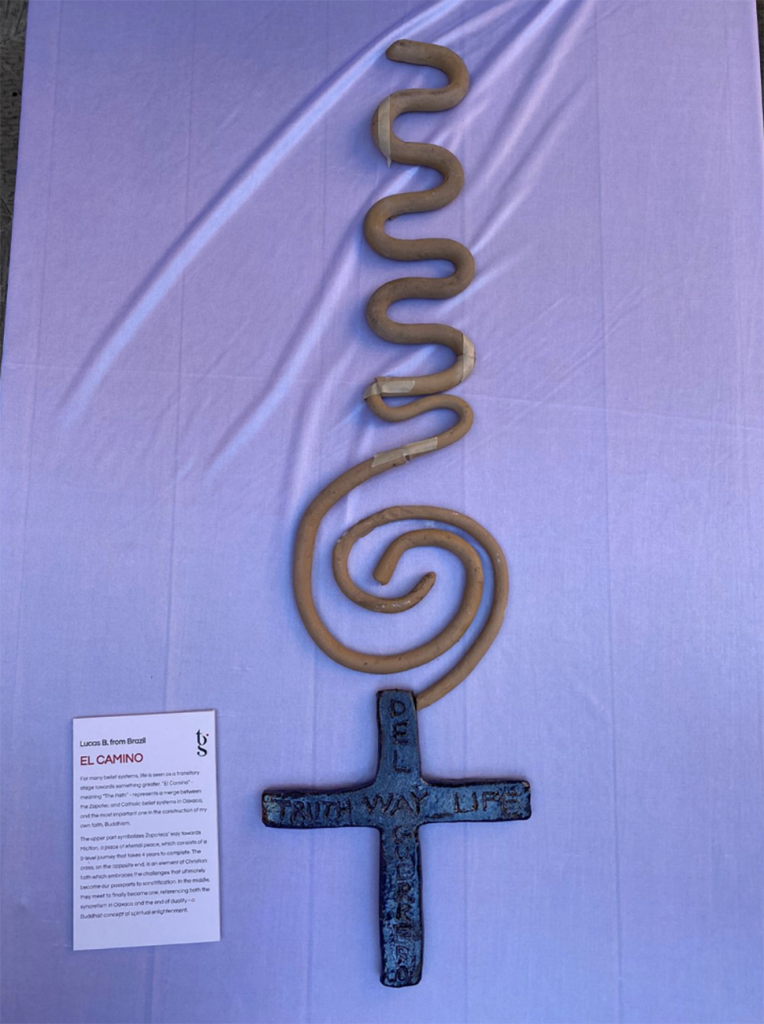
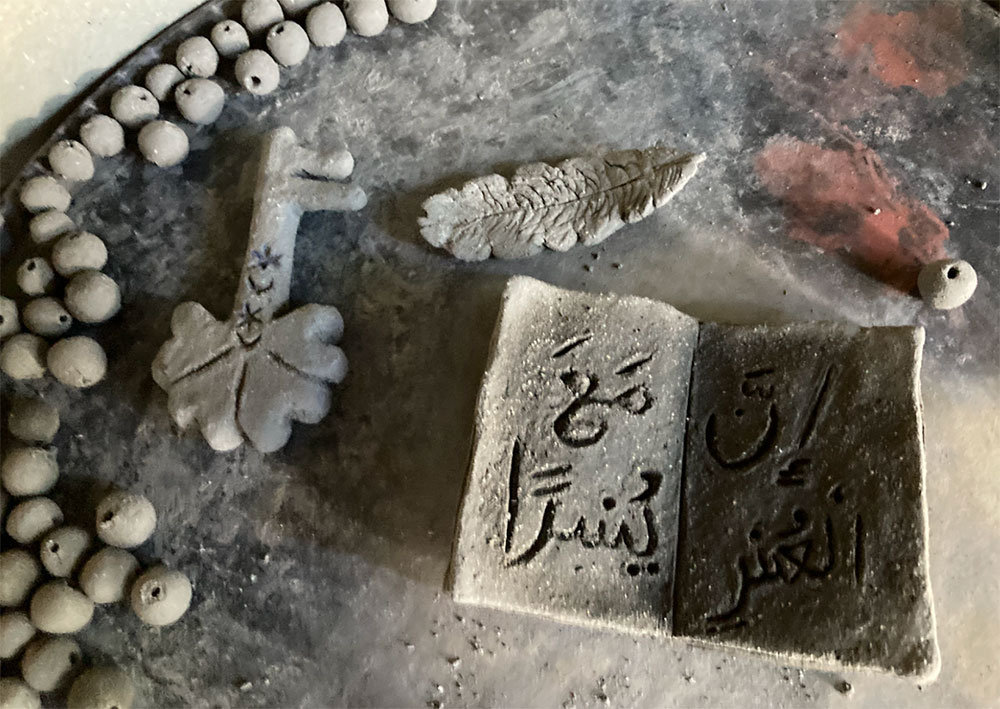
    Project Summary: Life is seen as a transitory stage towards something greater for many belief systems. “El Camino” – meaning “The Path” – represents a merger between the Zapotec and Catholic belief systems in Oaxaca, and the most important one in the construction of Lucas’s faith, Buddhism.

    The upper part of Lucas’s sculpture symbolizes the Zapotec’s way towards Mictlan, a place of eternal peace, which consists of a nine-level journey that takes four years to complete. The cross on the opposite end is an element of the Christian faith that embraces the challenges that ultimately become our passports to sanctification. In the middle, they meet to become one, referencing both the syncretism in Oaxaca and the end of duality – a Buddhist concept of spiritual enlightenment.

    Student Reflection:
    “Over my weeks in Mexico, I could explore in-depth the values of the belief systems that gave birth to Oaxaca’s unique syncretic landscape. As I appreciated the elements of these highly different cultures, I was able to see a multitude of symbols that resembled my own faith everywhere. The final sculpture I constructed is an embracement of both my learnings and some of my most foundational beliefs about life and the universe.”

  5. Qandeel-e-Zeist (Light of Life)

    by Minahil M.

    Driving Question: How can we model a clay sculpture inspired by Mexican beliefs and religious syncretism (the merging of different beliefs) to represent a fusion of our personal beliefs and values?

    Project Summary: For her project, Minahil created a sculpture of Qandeel-e-Zeist (Light of Life), which embodies the values and beliefs that guide and enlighten her life.

    Minahil’s project blends Zapotec symbolism, the Chinese Yin and Yang, Quranic verses, Urdu poetry, and personal emblems that convey how different cultures, people, and places have shaped the person Minahil is today.

    The treasure chest represents her beliefs and values and highlights how the elements in her sculpture are invaluable to her. Leaving the treasure chest open expresses the importance of being open-minded. It further indicates how her values and beliefs are changing.

    Student Reflection: “Everyone in the world has a set of values and beliefs that guide and enlighten their lives. Through this module, I learned about my own values and beliefs in-depth, developed a greater understanding and appreciation of the personal values of indigenous cultures in Oaxaca, especially the Zapotecs.”

  6. Journey to Monte Albán

    June 16, 2022 by Alex N.

    Driving Question: How can I preserve a part of Zapotec history and give it a new life in the form of VR experiences?

    Project Summary:

    Aarushi and Alex’s video focused on the Central Valley of Oaxaca and the civilization that emerged known as the “Be’ena’ Za” or “The Cloud People.” The Be’ena’ Za thrived and became one of the largest civilizations in Mesoamerica, and today they are known as the Zapotec.

    Alex and Aarushi introduce viewers to the world of the Zapotec through a VR experience. Their video takes you back in time on a journey into the magnificent city of Monte Albán. The pair invite you to embrace the wisdom of the Zapotec through astrology, religious, and ancient beliefs.

    Student Reflection: This module was really exciting for me. I learned a lot of new things and added multiple new subjects to my skill set. This module was also extremely challenging since I had no real prior knowledge about virtual reality or archaeology, but because of our excursions and guest speakers, I was able to create a video VR experience which I am extremely proud of!”- Aarushi A.

  7. Language Death in Oaxaca

    by Zoya A.

    Driving Question: How can I use video to present my investigations (SPEED factors) into the lives of the Zapotec people of Oaxaca, Mexico?

    Project Summary: In this project, Zoya looked at the lives of the Zapotec community in Oaxaca, and how their lives are impacted by their exposure to Spanish. Her film explores the different aspects of Spanish language exposure (in education, economy, and stigma) and what it meant for the Zapotec people, with a question left to the audience: What does the future look like for the Zapotec?

  8. Language Death in Oaxaca

    by Diego M.

    Driving Question: How can I use video to present my investigations (SPEED factors) into the lives of the Zapotec people of Oaxaca, Mexico?

    Project Summary: For his project, Diego focused on the death of indigenous languages in Oaxaca and how the Zapotec people are fighting to keep their language alive, despite the odds.

    Student Reflection:
    “Even though I live in Mexico, exploring another side of the culture was really interesting, such as language death. Connecting with people and learning about the story was something special that I can’t really put into words.”

  9. Halo: Modernizing the Traditional Filipino Dress

    June 15, 2021 by Gigi Engalla

    Driving Question: How can I modernize traditional Filipino fashion?

    Project Overview: For her mastery project, CM1 Student Gigi Engalla set out to create a fashion collection that modernizes the traditional Filipino. To do so, she mastered elements of couture craftsmanship and developed a deep understanding of Filipino fashion by learning about its significance and how its classic features can be integrated into a modern medium.

  10. Go With the Flow Module: Hula Hooping

    January 15, 2021 by Ella M.

    Driving Question: How can I apply an understanding of flow state into physical activity and self reflection order to increase my well being?

    Project Description:

    For this module, as a way to further learn about the flow state, I began learning how to hula hoop. During this process, I documented my practice each week and made a compilation video of my progress. This video shows my progress from when I first got my hoop, only knowing a few simple tricks, to six weeks in, when I have learned several more complex techniques.

    Reflection:

    “For me, what was most interesting about this project was not so much the hula hooping aspect, but learning about the flow state. I have been interested in neuroscience for quite some time now, and it was fascinating to be learning about something I could so clearly see demonstrated in my life through the practice with hula hooping.”

Sign up if you would like to receive occasional news from us.

Subscribe