Back
  1. AI Journalism

    August 31, 2023 by Santiago D.

    Driving Question:

    How can AI be applied in investigative, opinion, and solutions-based journalism in the context of digital communities in Bosnia?

    Module Summary:

    The “AI Journalism” module explored the intersection of artificial intelligence and journalism. The module aimed to understand the capabilities and limitations of AI in news writing and its impact on current events.

    Students investigated the origins and evolution of journalism in their home countries and Bosnia, comparing human-written articles to AI-generated content. They examined various types of journalism—investigative, solution-based, and opinion—and learned how AI can be ethically and legally integrated into these fields.

    The module included excursions to notable sites like the Al Jazeera Balkans, the National Museum of Bosnia and Herzegovina, and the Sarajevo Film Festival. Guest speakers provided insights into wartime reporting and modern journalism challenges, emphasizing the irreplaceable human element in storytelling.

    Through practical experiences and reflections, students created their own articles, juxtaposing them with AI-generated pieces to discern the unique human touch in journalism.

    For instance, senior student Santi D. created an article titled ‘Unraveling the Web of Deceit: Serbian Media’s Role in Spreading Fake News During the Yugoslav Wars,’ which examines the impact of misinformation during the 1990s conflicts in the Balkans. The article outlines how the Serbian media played a crucial role in shaping public perception and exacerbating ethnic tensions through the dissemination of fake news and propaganda.
  2. Carpentry Innovation

    August 1, 2023 by Niko W.

    Driving Question:

    How can you use traditional Bosnian carpentry techniques to create innovative product designs?

    Module Summary:

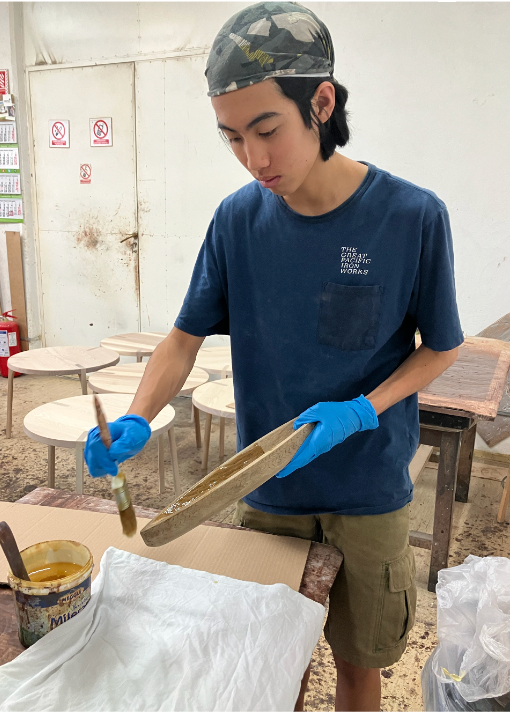
    The “Carpentry and Innovation” module, tasked students with transforming a plank of wood into an innovative and culturally significant piece over five days. Working closely with local experts in Konjic, the students learned traditional Bosnian carving techniques. They designed and created wooden carvings and objects, using both sketches and 3D models.

    Students visited the Zanat factory and a wood carving museum, where they were introduced to different types of wood, carpentry, and woodworking techniques. They also delved into the innovation aspect, learning about the difference between innovation and invention, legal and ethical considerations, and the process of idea protection through patents, trade secrets, and copyrights.

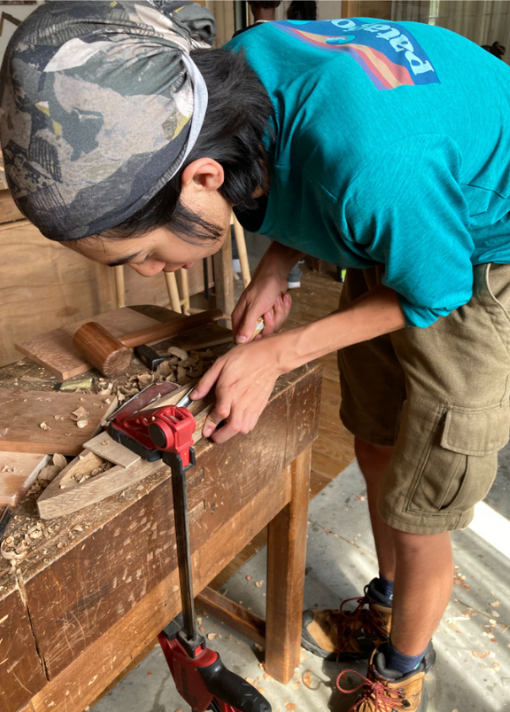
    After mastering the basics, the students created their final products in two factory spaces: Elektra, where they worked on sawing, chiseling, and filing their basic shapes, and Zanat, where they refined their shapes, added intricate patterns, and completed their projects with sanding and oiling.

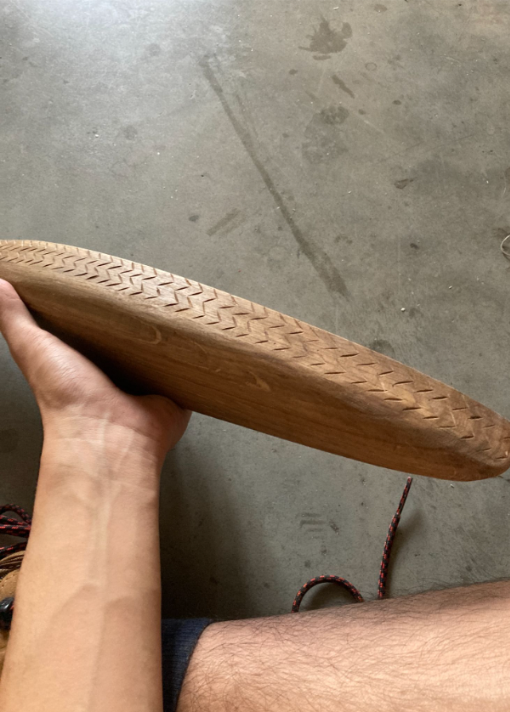
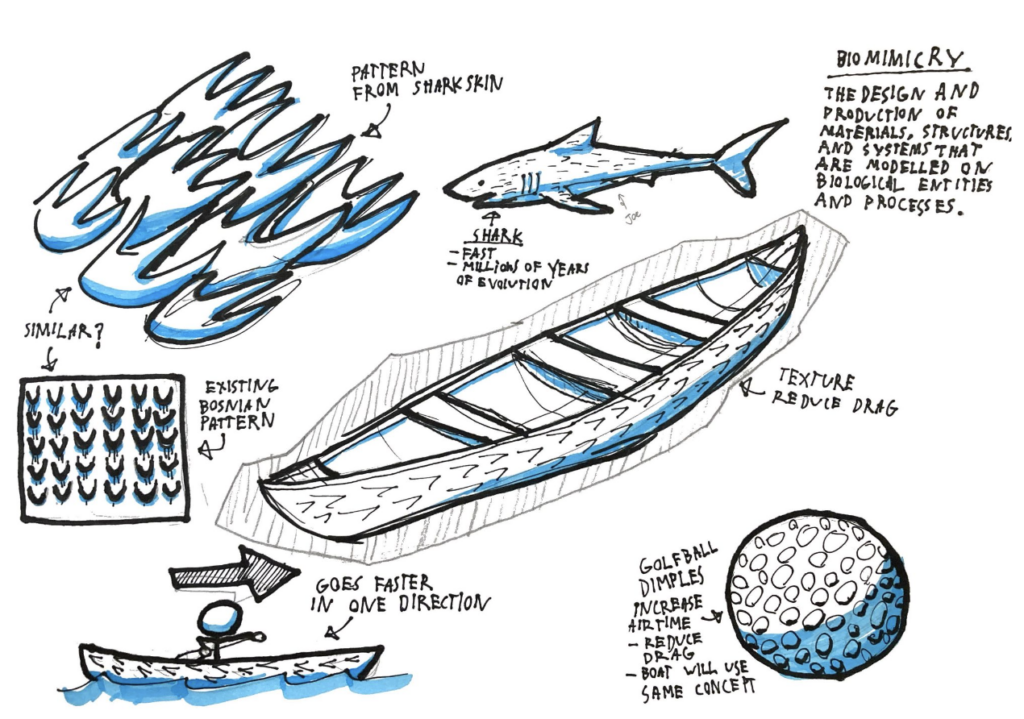
    Niko W.’s final product is an oak wooden boat with a unique texture designed to enhance its hydrodynamic performance, akin to the dimples on a golf ball or sharkskin texture. He employed two types of chiseling techniques—flat-headed, curved, and V-shaped—to serve different purposes in crafting the boat. The rip saw, while providing a cleaner cut, required more time compared to the bow saw, which removed more material but left a rougher finish.

    Initially using the rip saw for shaping, Niko later switched to the bow saw based on feedback from Alestra staff, prioritizing time efficiency over surface smoothness, as he planned to refine the boat’s sides through subsequent shaping and sanding. To achieve smoother edges and surfaces, he utilized a file initially for its material-removal capability, followed by 80-grit sandpaper to refine the texture further.

  3. STEMPact

    by David O.

    Driving Question:

    How can I create an engaging and educational virtual event that empowers young people to explore and pursue their interests in STEM fields?

    Project Summary:

    David O. created a project called “STEMpact” aimed at engaging young people in science, technology, engineering, and mathematics (STEM) fields. The project is designed to transform students from mere spectators to active participants in technological advancements. David, passionate about cognitive science and mathematics, recognized the challenges young people face in choosing specific STEM careers and sought to address this through immersive experiences.

    STEMpact featured a series of workshops, each focusing on different STEM fields such as marine biology, quantum computing, and biotechnology. These sessions included guest speakers who shared their experiences and advised participants on preparing for careers in these fields. The project successfully attracted participants from nine different countries, with an overwhelming majority finding the workshops helpful.

    David highlighted the personal growth and skills he developed through the project, including adaptability, networking, and leadership. He emphasized the importance of managing unexpected challenges, building professional connections, and coordinating various aspects of the event. The project’s success, reflected in positive feedback and growing participation, underscores its impact in igniting interest and passion for STEM among young learners. David concludes by encouraging others to forge new connections, innovate, and use their personal stories to address societal challenges.

  4. Why Plastics?

    July 1, 2023 by Sigurd R.

    Driving Question:

    How can I further understand the past, present and future of plastic through scientific tests, research, and inquiry, including and relating to the chemistry behind plastics?

    Project Summary:

    Sigurd R.’s project challenges the commonly negative perception of plastics by highlighting both their detrimental and beneficial aspects. He begins by acknowledging the environmental harm caused by single-use plastics, such as the Great Pacific Garbage Patch and the danger to sea life. However, he shifts the focus to the often-overlooked positive uses of plastics, particularly in the medical field where they are essential for procedures like open-heart surgery due to their sterility, versatility, and low cost.

    Sigurd also explores the historical use of plastics, noting that early forms of plastic-like materials, such as rubber, were used by the Mesoamericans as early as 1600 BCE. This historical context sets the stage for a broader discussion on the definition and perception of plastics. He argues that plastics are diverse and not well-defined, encompassing a wide range of materials beyond the common single-use items.

    He emphasizes the versatility, durability, and affordability of plastics, which make them invaluable in numerous industries, including automotive and food transportation. Sigurd acknowledges the environmental issues associated with plastics but argues for a balanced perspective that recognizes their essential role in modern society.

    Lastly, Sigurd touches on the future potential of plastics, mentioning innovative uses like conductive polymers. He cautions against a blanket rejection of all plastics, suggesting that doing so could hinder technological and scientific progress. His ultimate message is to encourage a nuanced understanding of plastics, recognizing both their benefits and their environmental impacts.

  5. Foodstainable

    June 13, 2023 by Andrea D.

    Driving Question:

    How can I reduce food waste, help dog shelters, and start a campaign in Peru and Oman by creating dog food?

    Project Summary:

    Andrea D, a Grade 11 student from Peru, observed the plight of stray dogs and the immense food waste generated each year. With over 300 million stray dogs globally and six million in Peru, many of which forage in garbage dumps, she saw an opportunity to tackle these issues simultaneously.

    In 2021, it was reported that half of Peru’s food was discarded, and Andrea realized that this wasted food could potentially feed countless stray dogs. Motivated to make a difference, she founded “Sustainable Kibble,” an initiative focused on creating dog food from food waste.

    Through extensive research, Andrea discovered that many commercial dog foods contain harmful preservatives and artificial colorings, which can cause health issues like allergies, high blood lipid levels, and cancer. She found that natural preservatives such as cabbage and beets not only preserve food but also provide natural coloring and make it more appealing to dogs. Additionally, papaya seeds were identified as an effective natural dewormer.

    Andrea experimented with different formulations and flavors, even testing the kibble on her own dogs to ensure its effectiveness. Her research, which demonstrated the viability of using natural ingredients in dog kibble, was documented in a paper she encourages others to read.

    To broaden the impact of her project, Andrea created a multilingual website (available in English, Spanish, and Chinese) where people can access her research, donate, share information, replicate the project in their communities, and purchase affordable dog food. Her ultimate goal is to establish a non-profit organization funded through donations and sales, with profits used to sterilize stray dogs to help reduce the stray dog population.

    Andrea’s vision is to feed and deworm stray dogs while reducing food waste, fostering a compassionate community, and promoting sustainable practices. She invites everyone to join her in making a positive and lasting impact on both the environment and the lives of stray dogs.

  6. English for Afghan Women

    by Mehdia S.

    Project Summary:

    Mehdia S, a senior student from Afghanistan, embarked on a mission to support women in her home country facing severe restrictions on education and social participation imposed by the Taliban since their takeover in August 2021. Recognizing the critical impact of these bans, which have left millions of girls without access to schooling or higher education, Mehdia launched the “English for Afghan Women” program to enhance English language and soft skills among Afghan girls.

    Far from Afghanistan, Mehdia found a way to contribute meaningfully by founding the English language program under the Afghan Youth Empowerment Camps, an organization she co-founded in 2019. This program, initiated from September to December, focused on developing reading, writing, speaking, and listening skills to elevate students’ proficiency from beginner to intermediate levels.

    The program attracted around 300 applicants, from which students were selected based on their academic needs. Mehdia and her team organized classes, assigned tasks, and provided weekly feedback and quizzes to monitor progress. The initiative also involved recruiting volunteers who received letters of recommendation for their contributions.

    The project concluded with the distribution of certificates to participants, marking the successful completion of the program. Through this initiative, Mehdia aimed to empower Afghan women, believing strongly in the transformative power of educating women for the broader societal good. As she noted, “If you educate a man, you educate an individual; but if you educate a woman, you educate a nation.”

  7. The Farafina Tales

    by Yeli K.

    Driving Question:

    How might I promote gender equality to a young population using traditional African tales?

    Project Summary:

    Yeli K, a senior from the United States, has written a children’s book titled “The Farafina Tales” aimed at promoting gender equality in West Africa. The book addresses critical issues such as child marriage, female genital mutilation, and violence against women, which are prevalent in countries like Senegal, Guinea, and Liberia. Through interviews with experts across the continent, Yeli K identified factors contributing to these issues, including lack of legislation, ineffective law enforcement, negative cultural perceptions of women, and lack of economic opportunities.

    Inspired by a study showing how children’s literature can shift gender perspectives in Rwanda, Yeli K sought to promote gender equality among young West Africans through literature. This led to the creation of a 30,000-word novel manuscript for 8 to 12-year-olds, which won a Scholastic Gold Key for the New York region and a National Silver Medal in the Scholastic Art and Writing competition.

    The story follows a 13-year-old girl named Mariama, who, with the help of a secret society of African heroes, saves her school from developers aiming to turn it into a mall. To write this book, Yeli K undertook a 150-hour course on writing for children, receiving a distinction. This was followed by detailed world-building and character development, guided by feedback from mental health and gender-based violence experts, children’s book authors, mentors, and the target audience of children.

    Yeli K wrote 1,000 words daily during November, utilizing National Novel Writing Month resources and community support. After completing the initial drafts, the book was distributed to eight children aged 8 to 12 in Lagos, Nigeria, for critical feedback, which was incorporated into the final draft.

    Through this project, Yeli K aims to inspire young people globally to use art to ignite profound social changes, demonstrating the power of literature in addressing pervasive societal issues.

  8. On the Other Side of the Bay

    December 1, 2022 by Yosef M.

    Driving Question:

    How can I plan and give a tour of “The Other Side of the Bay” (South Mumbai)?

    Project Summary:

    Yosef M. from Mexico, inspired by his classmates’ interest in exploring southern Mumbai, organized a guided tour for his first personal project. This tour provided a small group of four or five people with the opportunity to experience and learn about various aspects of the city.

    To ensure the tour’s success, Yosef undertook extensive research and planning. He investigated how to effectively organize a tour, set criteria for selecting the best locations, and devised a budget. Additionally, he prepared himself to speak publicly about the sites they would visit, ensuring that he could provide informative and engaging commentary.

    The tour was divided into several thematic sections. The first section focused on history and culture, with visits to significant landmarks such as the Gateway of India, Flora Fountain, Davidson Library, and Bombay Court. These locations offered insights into Mumbai’s rich historical heritage. The second section explored art and architecture, taking the group to various art museums, a highly expensive private residence, and areas showcasing vibrant street art. This part of the tour highlighted Mumbai’s diverse artistic and architectural landscape.

    In the third section, Yosef aimed to provide an understanding of the city’s transportation system. The group experienced different modes of transport, including the metro, auto-rickshaws (tuktuks), taxis, and public buses. This segment emphasized the sustainability and efficiency of Mumbai’s transport network. The fourth section focused on entertainment and hospitality, featuring visits to the Taj Hotel, Phoenix Palladium Mall, and the successful Chayos chain. This part of the tour showcased prominent hospitality and entertainment venues in the city.

    The fifth section highlighted Mumbai’s religious diversity by including visits to a mosque, a synagogue, a Buddhist temple, and the Marathbas temple. This segment underscored the city’s multicultural and multi-religious fabric. The final section examined urban planning and infrastructure, with stops at the Worli Sea Link, Marine Drive (Queen’s Necklace), and the ongoing Mumbai Coastal Road Project. These locations illustrated the city’s architectural landmarks and ongoing efforts to improve urban mobility and infrastructure.

    Despite some logistical challenges, such as last-minute changes in attendees, the tour was a success. Yosef’s enthusiasm and thorough preparation ensured a rewarding experience for the participants. Following the initial project’s success, Yosef continued to organize tours, expanding to additional sites like Mahatma Gandhi National Park, various temples, restaurants, and churches. This ongoing initiative demonstrated Yosef’s commitment to fostering curiosity and exploration, significantly extending the project’s impact beyond its original scope.

  9. Understanding Mental Health

    July 22, 2022 by Noemie T.

    Driving Question: How can I de-stigmatize mental illness through information and awareness?

    Project Description: For her service-learning project, Class of 2022 Senior Noemie created lessons around understanding the fundamentals of mental health.

    These include understanding what mental health is, what factors can affect mental health, understanding mental illness, keeping yourself and others safe, and how and where to reach out or find help. Noemie then presented these seminars to students at TGS due to being unable to complete the seminars at home due to Covid.

    Project Reflection:
    I learned so much from this experience, and I am so grateful that I got the opportunity to complete this project and hopefully help at some people understand this topic better. This project was very important to me as, growing up in NZ, I have had so many experiences seeing the effects of poor mental health on peers and people within my community, so it meant so much to be able to be part of the road to a better future around this topic.

  10. Leftism Through Zines

    July 21, 2022 by Ella M.

    Driving Question: How can we represent the evolution of leftist movements in Mexico through a zine?

    Project Summary: Ella and Luiza’s project is about the evolution of leftism in Mexico, especially in the region of Oaxaca. They explored the Mexican Revolution, the Feminist Movement in Mexico, and the future of Indigenous leadership throughout the term, which cumulated in a final zine showcasing their learning.

    Student Reflection:
    “I loved this project. Truly, I cannot describe how proud I am of this Zine and the work Luiza and I accomplished. Also, there is no way to describe the joy and relaxation of sitting cutting out magazines for hours on end; it is the best thing ever.”- Ella M.

Sign up if you would like to receive occasional news from us.

Subscribe