Back
  1. The Hindsight Podcast

    June 13, 2023 by Raf W.

    Driving Question:

    How can I document the Successes of TGS alumni to inspire current and future students while simultaneously creating a TGS legacy?

    Product output from this module:

    The final product of this Mastery project will be a podcast show that continually releases episodes. In the episodes will be interviews with TGS alumni about where they are at now in life, what role TGS played in that, and how they define success.

    Project Summary:

    Raf W, a senior from the Netherlands, recognized the paradox of living in a digitally connected society where true connections often remain shallow. Despite over four and a half billion active social media users, many people, including 60 percent of the U.S. population, report feeling lonely. This disconnect between perceived and actual social connectivity is a significant issue, even within innovative communities like Raf’s boarding school, TGS.

    Understanding the unique bond shared by TGS students due to their shared experiences and challenges, Raf saw an opportunity to strengthen this community. Inspired by the need to combat global loneliness, Raf took it upon himself to create a more active and supportive environment within TGS.

    To address this, Raf launched the “Hindsight Podcast” as part of his Mastery project. This podcast serves as a platform for TGS alumni to share their work experiences, lifestyles, and personal journeys. The goal was to create a framework where knowledge and experiences of past students could benefit current and future students, reinforcing lifelong learning and community bonds.

    Over eight months, Raf produced and published four episodes, with another one on the way. The podcast has been well-received, providing comfort and reassurance to current students about the value of their unique experiences. Through these conversations, Raf himself learned that success is not a one-size-fits-all concept but a personal journey defined by individual criteria and fulfillment.

    Raf’s “Hindsight Podcast” exemplifies his commitment to making a positive impact on his community. By fostering deeper connections and sharing valuable insights, Raf aims to combat loneliness and strengthen the TGS community in a meaningful way.
  2. The Farafina Tales

    by Yeli K.

    Driving Question:

    How might I promote gender equality to a young population using traditional African tales?

    Project Summary:

    Yeli K, a senior from the United States, has written a children’s book titled “The Farafina Tales” aimed at promoting gender equality in West Africa. The book addresses critical issues such as child marriage, female genital mutilation, and violence against women, which are prevalent in countries like Senegal, Guinea, and Liberia. Through interviews with experts across the continent, Yeli K identified factors contributing to these issues, including lack of legislation, ineffective law enforcement, negative cultural perceptions of women, and lack of economic opportunities.

    Inspired by a study showing how children’s literature can shift gender perspectives in Rwanda, Yeli K sought to promote gender equality among young West Africans through literature. This led to the creation of a 30,000-word novel manuscript for 8 to 12-year-olds, which won a Scholastic Gold Key for the New York region and a National Silver Medal in the Scholastic Art and Writing competition.

    The story follows a 13-year-old girl named Mariama, who, with the help of a secret society of African heroes, saves her school from developers aiming to turn it into a mall. To write this book, Yeli K undertook a 150-hour course on writing for children, receiving a distinction. This was followed by detailed world-building and character development, guided by feedback from mental health and gender-based violence experts, children’s book authors, mentors, and the target audience of children.

    Yeli K wrote 1,000 words daily during November, utilizing National Novel Writing Month resources and community support. After completing the initial drafts, the book was distributed to eight children aged 8 to 12 in Lagos, Nigeria, for critical feedback, which was incorporated into the final draft.

    Through this project, Yeli K aims to inspire young people globally to use art to ignite profound social changes, demonstrating the power of literature in addressing pervasive societal issues.

  3. Omana

    August 3, 2022 by Sofia V. and Marily M.

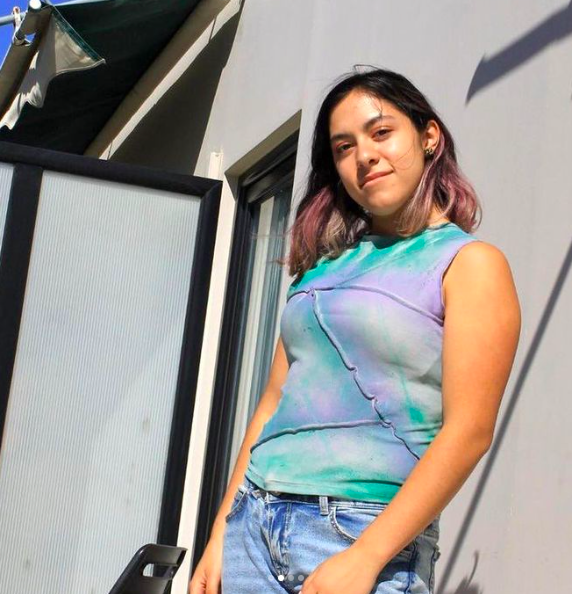
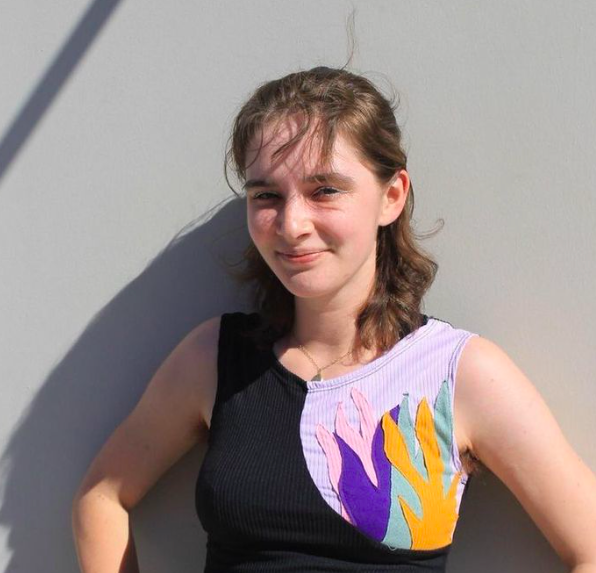
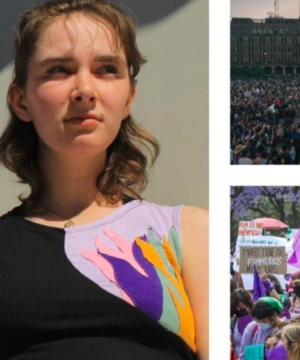
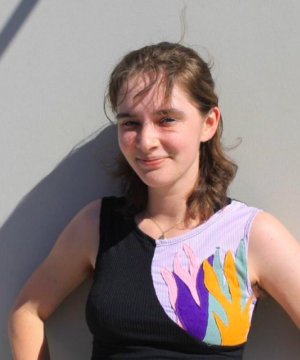
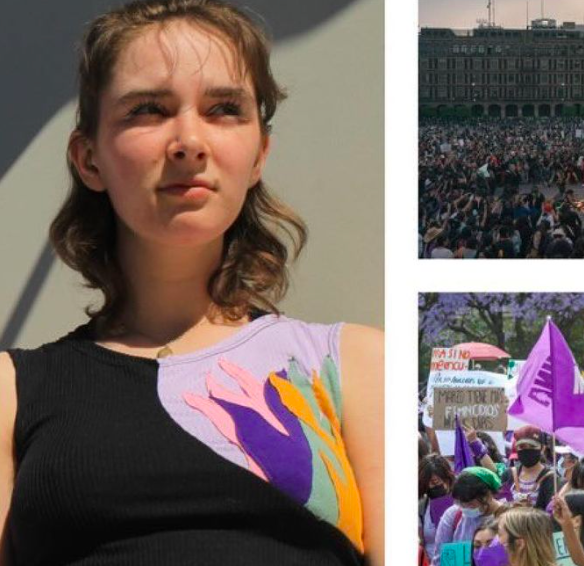
    For their Mastery project, Marily and Sofia created OMANA – a clothing brand focused on redesigning feminism. Marily served as the design director and Sofia as the business director. Together they launched their first design- FURIA.

    Fire is the main element of this design. Here, it represents the fires that take place in the protests because of anger or conflicts, as well as the fury of the feminist movement and the extreme strength that appears when all women come together.

    Purple represents feminism and greens the fight for legal abortion. Pink symbolizes intersectionality, and orange the feminist movement’s protests. When wearing FURIA, you feel empowered.

  4. The West Egg: Taking Eggs from Farm to Table

    June 8, 2021 by Hanna Westphal

    Driving Question: How can I make a farm-to-table egg delivery service become a viable business in a suburban community?

    What did you take away from this project? I learned that perseverance is very important in order to get the end result you want. When I thought I was done and then realized there was something that bugged me in my video I made sure to take the time and fix it. This was very frustrating at times but in the end I was very happy and confident with my proposal.

    What are you most proud of? I’m most proud of the extremely useful life skills I learned throughout this process….and that I made $485 of total income.

  5. Ecology of the Mind: A Short Film on Buddhism

    May 21, 2020 by Soeun K.

    Driving Question: How can I acquire deep knowledge on Buddhist philosophies and their perspectives on the self and the world by working with monks and creating an original short film?

    Project Description: My film introduces the Korean tradition of Zen Buddhism and its view on how to live a good life.

    What were your goals for this project? My goal was to gain deep level of understanding on Buddhism, living it, and sharing it with others. I achieved all of these as I spent significant amount of time studying the text of Buddhism, living as Buddhist at a temple, and filming what I have learned to share with the world.

    What were your learning takeaways? I’ve learned that suffering comes from trying to perceive impermanent thing as permanent and unchangeable. This includes my sense of self, my life, values, things I cherish at the moment… etc These are not something solid. They are very much fluid, temporary concepts and consists of myriads of components which forms and alters them. Accepting that, and staying thoroughly present, instead of trying so hard to extend the lifespan of these fleeting concepts, will lead to a more fulfilling life.

    What are you most proud of? Experiencing even for a short amount of time, the freedom of not needing anything. Happiness to just be.

  6. Queeries: Effectively Communicating the Many Facets of the LGBTQ+ Community

    by Jess P.

    Driving Question: How can I use a video format to effectively communicate the many facets of the LGBTQ+ community to someone who knows nothing about it?

    Project Description: This project is a 5-part video series explaining the LGBTQ+ community for a beginner audience. The intention of these videos is to be a resource for anybody who would like some more information on the community. You can find all five videos below.

  7. Wonderful People: A Photo Essay

    by Charlotte T.

    Driving Question: How can I create a portrait photo essay which summarizes my senior year?

    Project Website: https://charlottesteckart.wixsite.com/mysite

    Project Overview: In this mastery project, I made a photo essay on people in my life who contributed to who I am today.  I wanted to photograph family/friends/teachers/and relatives. This wrapped up my senior year and the last year of a six-year journey. I also added written reflections and poetry to each of the portraits I took.

    Sample Photos from the Project:

    Ina
    Paula
    Elyce
    Vax
    Adnan
    Adi

  8. The Silence of Art

    by Julia G.

    Driving Question: How might I create an uplifting documentary that shows how deafness adds value and diversity to our society?

    Project Description: For my second mastery project, I decided to improve my filmmaking skills by making a documentary about deaf artists living in Melbourne. The main objective of this was to tell a story of a group that’s not often talked about and to portray it in a positive, inspiring way. The film sheds light on what it’s like to be a deaf artist in a hearing world and the struggles that come with it. But most importantly, it shows that deafness brings a valuable perspective to our society by showcasing the talent and passion of two Australian artists.

    What are the biggest lessons you learned through the process of your mastery project? I think the main thing I’ve learned through this project is the importance of being adaptable and flexible when things don’t go as planned, and knowing that some things are just outside of my control.

  9. Unbe-leaf-able: The DIY kit that will kickstart your urban farming adventure

    May 20, 2020 by Aurelia K.

    Driving Question: Why is the average person not aware of food miles? How can I make people more aware?

    Project Overview: Over the course of the last summer, I became aware of how many issues there are in modern agriculture. I focused specifically on the issue of “food miles” which are the carbon emissions produced through transporting food from farm to table. That’s where I got the idea for my mastery project.

    The core idea of my mastery project is to teach people about the food miles problem and give them ideas on how to counteract it, through a science kit. I made an urban agriculture science kit that uses hydroponics to teach about food miles and how they can be mitigated using urban agriculture.

    Throughout this project, I did a lot of research on urban agriculture and plant growth, for the kit, and a lot of research on marketing and branding, as a method of spreading the message

    How to Build Your Own Hydroponics Kit:

    How do Hydroponics work?

    How do hydropronics work?

    How to build a hydroponics station


    How to build a hydroponics station
  10. Astrobiology U-explore: Creating Science Experiments for Kids

    by Amelie A.

    Driving Question: Is there life on Mars?

    My goals with this project have been to get people thinking about astrobiology and the possibility of extraterrestrial life, and work towards the general democratization of scientific thinking and knowledge. It is my belief that every member of society should have the tools and ability to conduct scientific investigations if they so wish, and to engage critically with new scientific discoveries and current events. Science isn’t something that should only be available to people who have a four year degree and a lab!

    This is why I created a kit that can be used anywhere, by anyone, and bring the study of extraterrestrial life to their own home. I designed/adapted three experiments and activities to inspire critical thinking, scientific inquiry, and knowledge building surrounding biology, astronomy, and alien life. I also took a deeper look in my capstone paper at the reasons why there is so much misinformation about aliens in the media and amongst the general public, and along the way discovered a surprising love for science communication! The conversations I had that this kit inspired are the biggest proof that I met my goal of democratizing science; maybe if we all spent a little more time talking about life outside of earth, we’d be able to make life a little better inside of earth too!

    What are you most proud of?

    I’m most proud of the fact that even in the face of hardship, and people telling me that I couldn’t make this work, I chose to listen to all of the amazing people encouraging me to keep going and try another strategy. This project started out looking very differently, but I couldn’t be happier with how everything turned out. In fact, this product aligns far more with my original goals than the experiment I was planning from the start!

    It was so worth it to stay true to my original intention, and put in the extra detail work to make this something I could be really proud of leaving as my TGS legacy.

    What are the biggest lessons you learnt through the process of your mastery project?

    I learned that the two keys to a successful project are a lot more subtle than you might think: logistics, and a whole lot of feedback. The biggest mistake I made at the outset of my Mastery was not leaving enough time for certain logistical processes to take place, meaning that eventually, I didn’t get the things I needed in time to do the experiment I had planned. Preparation is really nine-tenths of it, and is an essential part of making all the fun showy stuff a possibility!

    Feedback is the other big piece of the puzzle. It’s so easy to get caught in your own little Mastery project bubble and forget that the reason you’re doing all this work is to create something other people will be able to interact with and enjoy! It’s essential to keep that factor in mind every step of the way and appreciate every pair of eyes you can get on your project whenever possible.

Sign up if you would like to receive occasional news from us.

Subscribe