Back
  1. Narrative of Life

    December 10, 2024 by Teacher-Led Module

    Driving Question:

    How can we use multimedia literary expression to tell the story of conservation of biodiversity in Brazil?

    Module Summary:

    The teacher-led module “Narrative of Life” explores how storytelling can be used to communicate the importance of biodiversity conservation in Brazil. Guided by the driving question, how can we use multimedia literary pieces to tell the story of conservation of biodiversity in Brazil, students investigate environmental issues through creative expression, combining research with artistic interpretation to raise awareness about human impact on nature.

    Throughout the module, students participate in a range of field experiences, workshops, and expert-led sessions that deepen their understanding of conservation and storytelling. Learners engage with professionals such as an agroforestry project leader, take part in poetry and vocal workshops, and join a boat expedition with a marine bioacoustics expert. A key highlight of the module is a week spent in the Amazon, where students gain firsthand insight into biodiversity and conservation efforts, supported by local organizations and experts.

    In their final projects, students create immersive multimedia literary pieces that communicate environmental narratives in creative ways. These projects include performances, writing, and audiovisual storytelling that aim to inspire awareness and action. For example, students present works such as a song that personifies nature to highlight the impact of human exploitation, using artistic expression to convey complex environmental issues. Through this interdisciplinary approach, the module emphasizes the power of storytelling in driving meaningful change and fostering a deeper connection to the natural world.
  2. Beyond Existing

    September 12, 2024 by Teacher-Led Module

    Driving Question:

    How can we apply our learning of indigenous environmental advocacy in Canada to create a sustainable NGO in our home country?

    Module Summary:

    The teacher-led module “Beyond Existing” explores the intersection of Indigenous environmental advocacy and NGO development in Canada. During the module, students examine how Indigenous perspectives, histories, and cultural traditions shape approaches to environmental stewardship and community advocacy. The module challenges students to consider how these lessons can be applied globally by asking the driving question: how can students use their learning about Indigenous environmental advocacy in Canada to create a sustainable NGO in their home countries?

    Throughout the module, students engage in an immersive learning experience that combines research, workshops, guest speakers, and field experiences. Learners begin by building foundational knowledge about Indigenous history, culture, and social narratives in Canada before exploring real-world examples of advocacy and nonprofit work. Students also travel to Bowen Island, where they meet Indigenous artist and storyteller Simon James and learn about cultural practices such as totem pole carving, as well as visit the Chinatown Storytelling Centre to explore the relationship between governments and NGOs.

    In the later stages of the module, students participate in workshops focused on NGO development and social entrepreneurship, learning how to craft mission statements, develop a theory of change, and frame social issues effectively. Students also meet leaders such as Chloë Fraser, an environmental advocate and TGS alumna, and community figures including Karlen Thomas and Manvi Bhalla, who share their experiences in advocacy and nonprofit leadership. The module culminates in a charity ball event, where students pitch their NGO ideas to a panel of guests in order to secure support for their initiatives and demonstrate how they can apply their learning to create meaningful change.

  3. Fresh Air Project

    January 27, 2022 by Sara G.

    This module was unique to me, as I had never known how interested I was in architecture until I experienced it during these two months. I have also learned the importance of focusing on the journey and the learning instead of making my product look perfect.

    -Class of 2023 Student Sara G.

    Driving Question: How can I design and build a model home or community that will function efficiently in a desert environment?

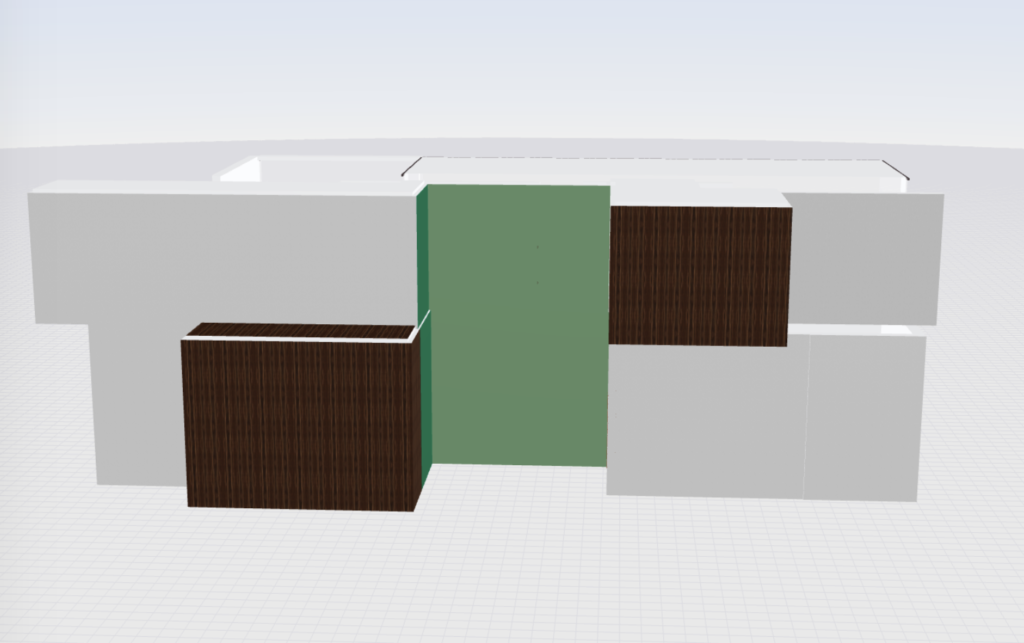
    Are you looking for a house that is both nature-friendly and luxurious? Then my project, “Fresh Air,” is perfect for you! Located in The Palm Islands, it combines different panoramic views, from the relaxing beach view to the moat with the fish, and finally, the lush green spaces all around the house.

    This house combines many aspects of sustainability: It saves water by taking it from the beach and using it in the pool and the moat. The greywater is used for watering the garden and for the flowers all around the house. The materials used (concrete, bamboo, etc.) are very eco-friendly. Solar panels help produce electricity using solar energy. The fish in the moat produce waste that contributes to the growing of plants.

  4. Emergent Behavior Simulations

    June 7, 2021 by Seb O.

    Driving Question: How can I apply my knowledge of emergent behaviors in a visual program to find the most efficient rule sets for species’ environments?

    Module Overview: Throughout the course of this project, Seb learned how to program in C# and Java alongside learning how to create a polished simulation of emergent behaviors in species using the Unity 3D-processing software. Emergent behaviors refer to when individual parts come together to work as a whole, in this case, the flocking behavior of birds. 

    Seb started by looking at birds as they are the most heavily documented species in emergent behaviors. He gathered data about the best rule sets. Based on this data, he determined which of the birds’ flocking patterns, including separation, alignment, and cohesion, were the most effective. 

    Project Reflection: “I learned a lot in all aspects of the product: data synthesis, graphing, programming, and more. The bit I enjoyed most was by far the data analysis, as I got some actual feasible results, all from my computer simulation.”

Sign up if you would like to receive occasional news from us.

Subscribe